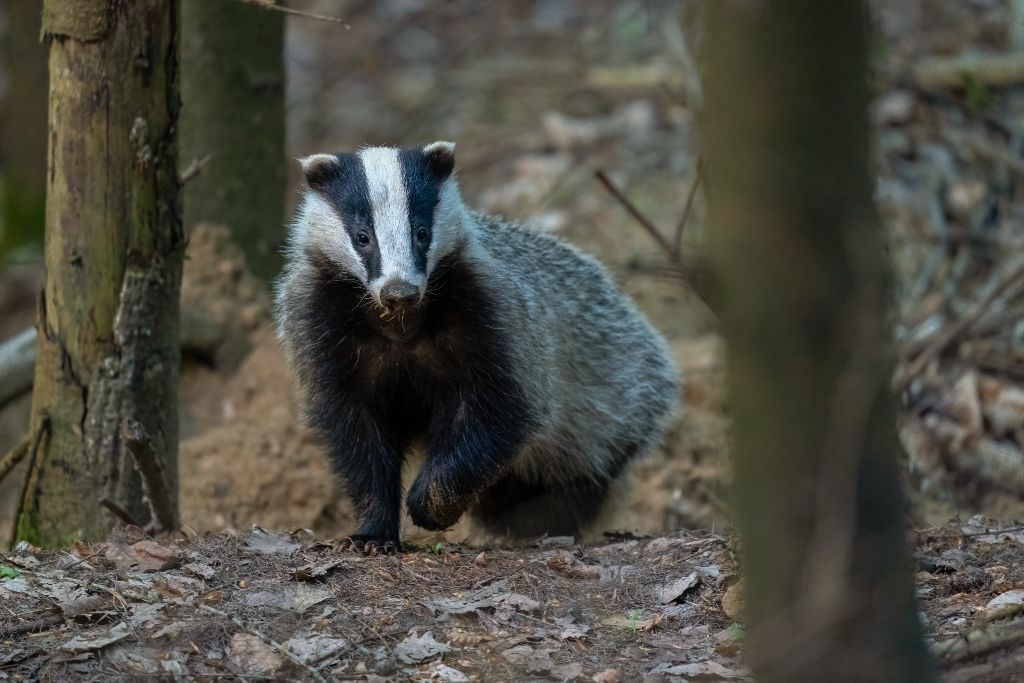
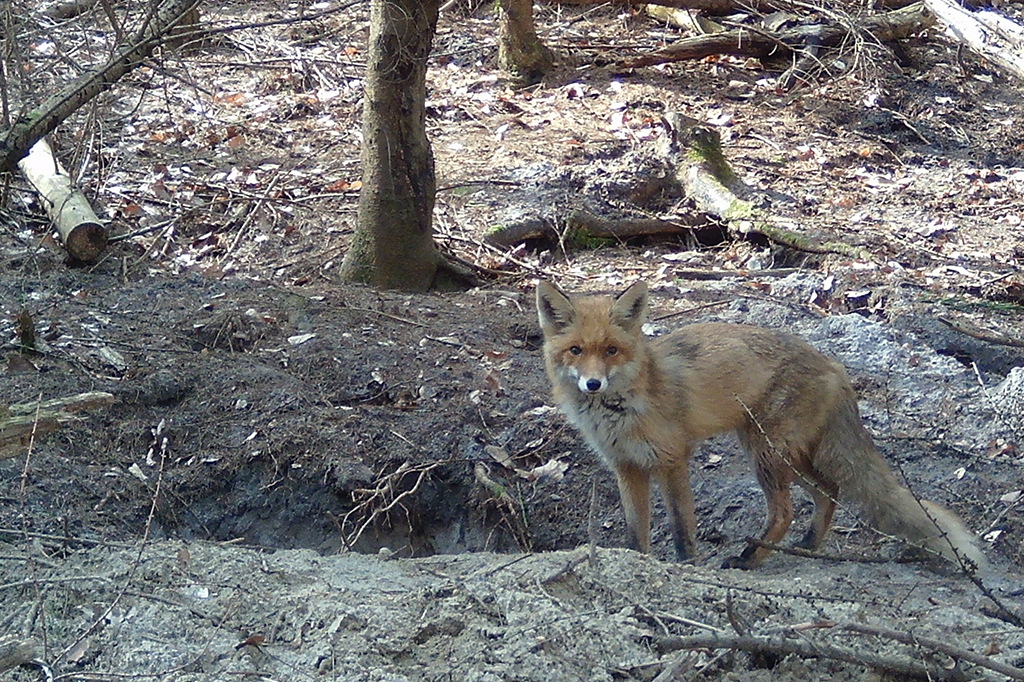
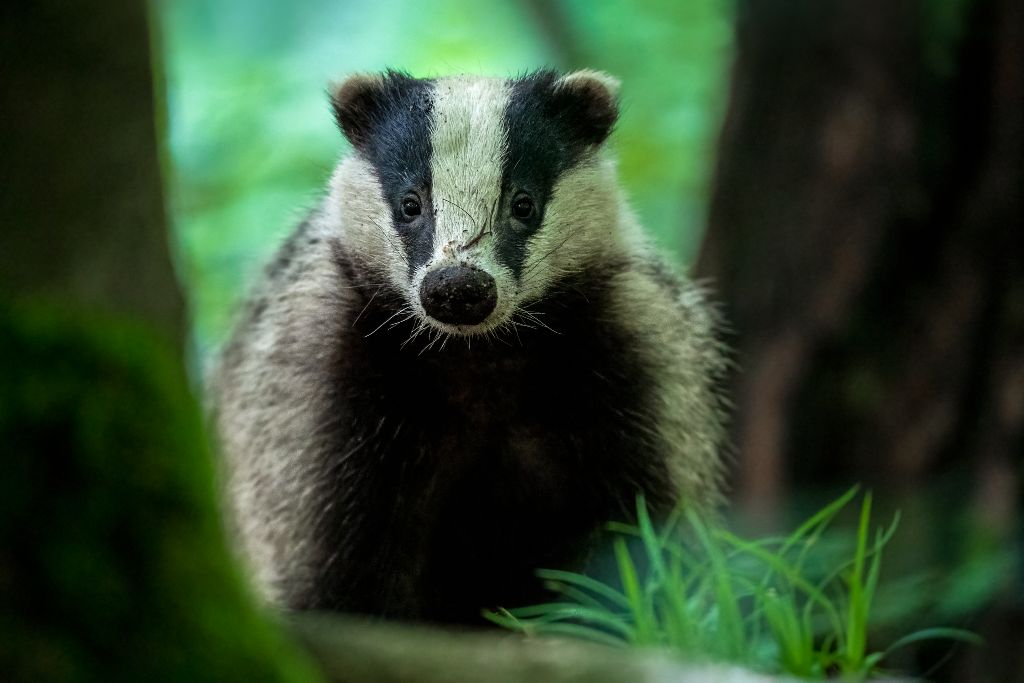
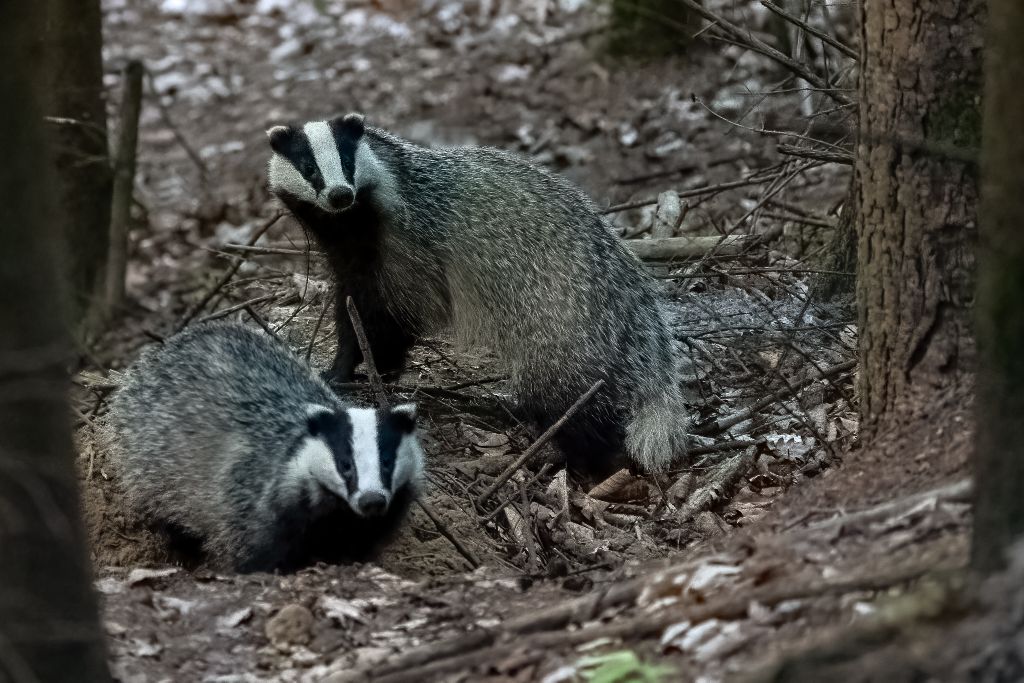
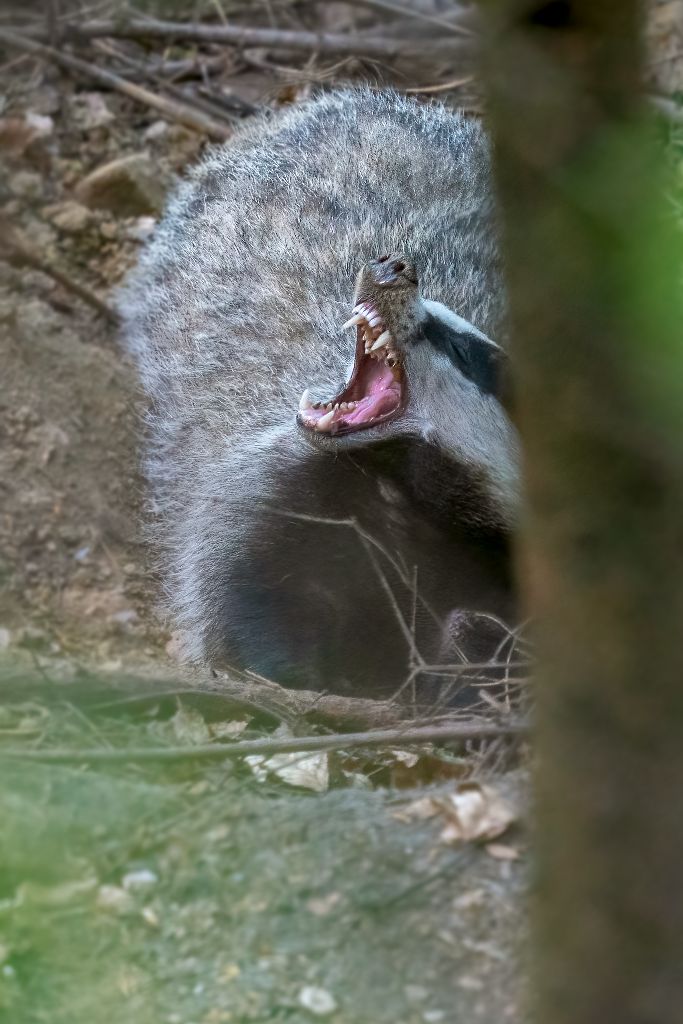
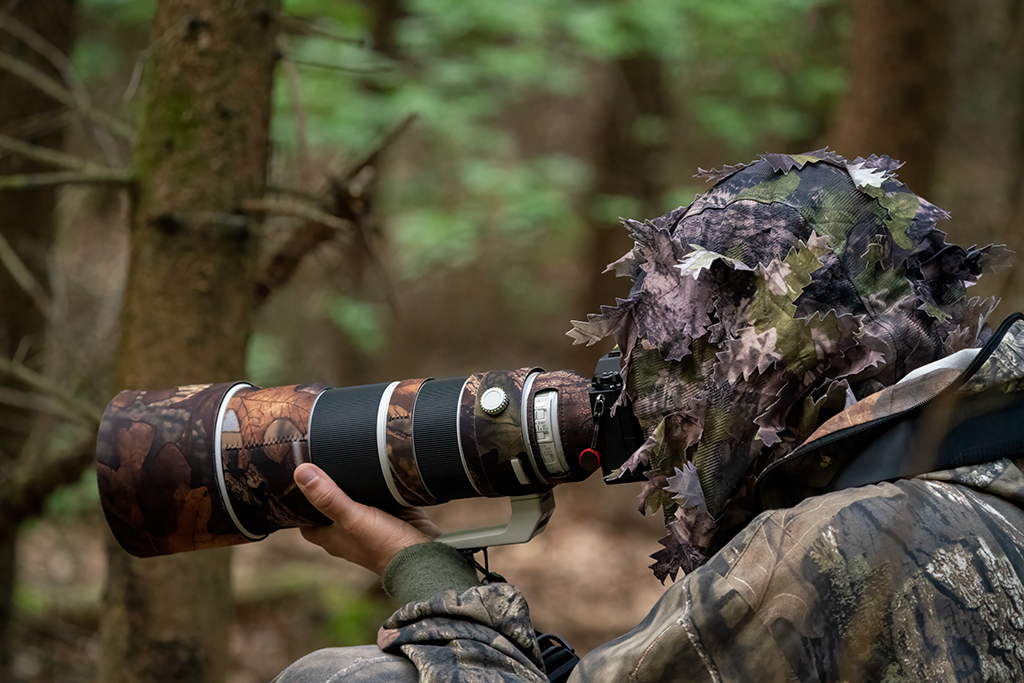
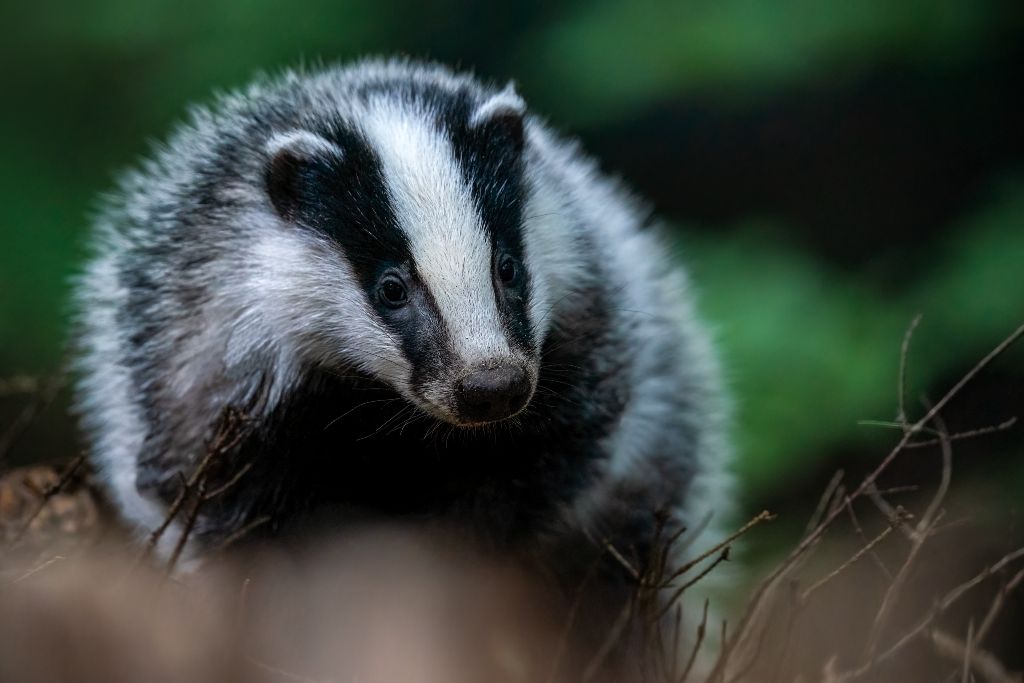
Due to nocturnal lifestyle, photography of badgers is specific in terms of settings. Lack of light is an obvious challenge for our camera. Of course, this leads to entering high ISO values and limits your time on set. Darkness will also be a problem for your auto-focus system. The bright lens turns out to be invaluable, but comes with a price-tag not everyone can afford. Also, lush vegetation and badgers’ liking for building burrows in secluded places also work to your disadvantage. What you can do in such scenario then?
Lens selection
Badgers are quite massive mammals so depending on your photography style you can choose different focal lengths suiting your taste best. Wider angle will provide you with more of an environmental type of shot and might be great if your sett is located in a more open area and light is not as limiting. Zoom lens like 70-200mm might be a great choice. In the forest’s setting longer focaI lengths are preferred. We are currently using 200-600/F5.6-6.3 but if we could choose any other lens possible best suited would be 400/F2.8 both in terms of range needed, as well as aperture value.
Aperture/shutter speed/ISO
For us, semi-manual setting with automatic ISO seems to be most convenient. Choose lowest aperture value allowed by your lens and check ISO values selected by your camera. The only way to work around ISO (expect to see values ranging between 12800 or higher and histogram showing your picture to be underexposed by couple EV) is to go down with shutter speed. At 600mm with F6.3 we could get away with reasonably sharp photos with shutter speed set at 1/30 or 1/50s while handholding. Always keep your sensor and lens stabilization ‘on’.
Autofocus
Expect your autofocus system to hunt a lot. Manual override might be useful. Otherwise use your preferred AF mode, be it spot, wide or zone. As we are mirrorless shooters we always shoot in continuous AF. To increase probability of getting sharp shot, we use electronic shutter in silent mode and long bursts. Here, statistics play to your advantage. Out of hundreds of frames, perhaps one or two will be acceptable.
Other gear
At this point we don’t use hides because we prefer mobility and slight adjustments to the view point, but this is of course possible and recommended if you have your sett located in place where this can be deployed without disturbance
Tripod is another gear that may be useful to offer stabilization, but from our experience was just another element to carry and we wanted to be as light as possible. If we were to select the alternative, groundpod sounds better as it offers lower perspective and is significantly smaller and easier to maneuver with while on location.
Flash photography is also something we didn’t practice with badgers mainly because we don’t want to disturb or upset them in anyway, and also prefer even lighting conditions rather than spot lighting offered by flash. Bear in mind your first flash may be the last one…