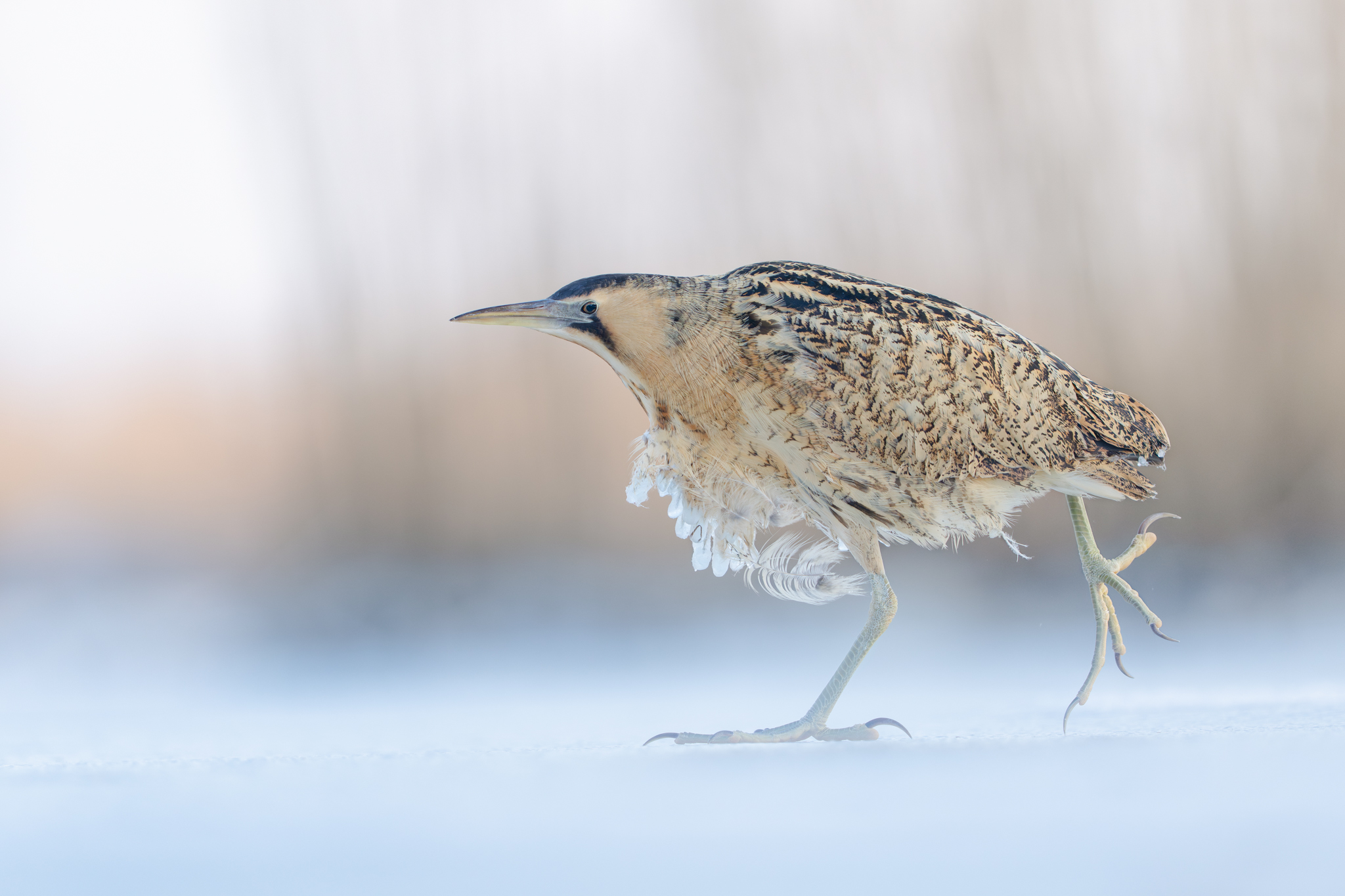
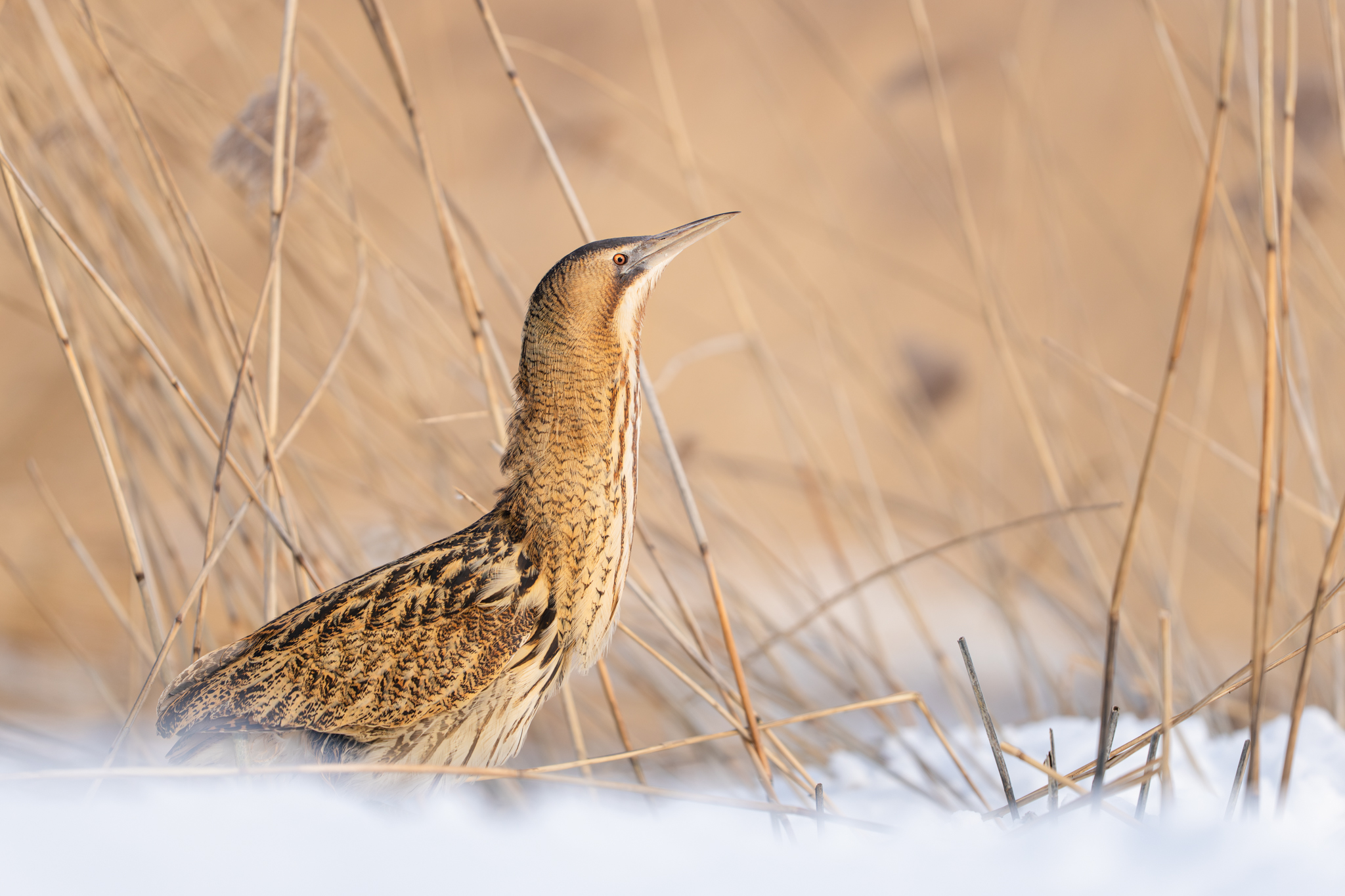
A Winter to Remember

I have waited years for a winter like this. Honestly, I didn’t expect it. I can barely remember proper winters from my childhood—the kind with snow piles two meters high, temperatures reaching -20°C, and snow lasting from December to March. Or are those just exaggerated childhood memories?

In my photography career, there are several reasons why I hoped so much for a proper winter season. First of all, it differs drastically from the usual weather we get this time of year, which is typically damp, dark, and cloudy. Snow brings white landscapes, frequent sunshine, and highly attractive photo opportunities that often draw foreign visitors too. Furthermore, there are a few subjects I missed when I first started my photography journey, for reasons I will explain later: bison, northern hawk owls, and, of course, Eurasian bitterns.

What I enjoy most about photography is the time spent with my wife, close friends, or in solitude. I like being masked or hidden in a camouflaged hideout—whether it’s a tent, a makeshift blind, or behind a camo net. Photographing bitterns during this winter was the exact opposite of that. That was why I decided to avoid this photo opportunity years ago when Wanda and I were just a year into the hobby. The same applies to hawk owls—very, very rare visitors to our country that attract massive crowds of photographers and birdwatchers.

So here we are, five years later. During that time, we hadn’t seen a single proper winter in the northern part of the country. Winter here is even rarer than in other regions because we have a huge warm buffer: the Baltic Sea. It gets warmer and warmer every year, storing even more energy for autumn and winter. Over those years, I came to the conclusion that the next time the opportunity arose, I would go out and take the photos anyway. Maybe because I was scared there wouldn’t be a next time. Maybe because I was curious to witness the spectacle. The ease of photographing bitterns in the snow was also very tempting, and I wanted to see how I would experience the crowds and the whole „behind-the-scenes” mess.

The Big Freeze and an Ethical Dilemma

Furthermore, within the Polish wildlife photography community, several heated discussions have raged this year. These debates mostly regarded wildlife ethics and were sparked by the practice of baiting predatory birds with meat during the winter. Such baiting can attract larger carnivores, like wolves—not to mention the wolf and bear hides in the mountains of southeastern Poland. Funnily enough, the bitterns didn’t make it to the national press and were only discussed locally. So, why bitterns and ethics? You will find out in the next paragraph.

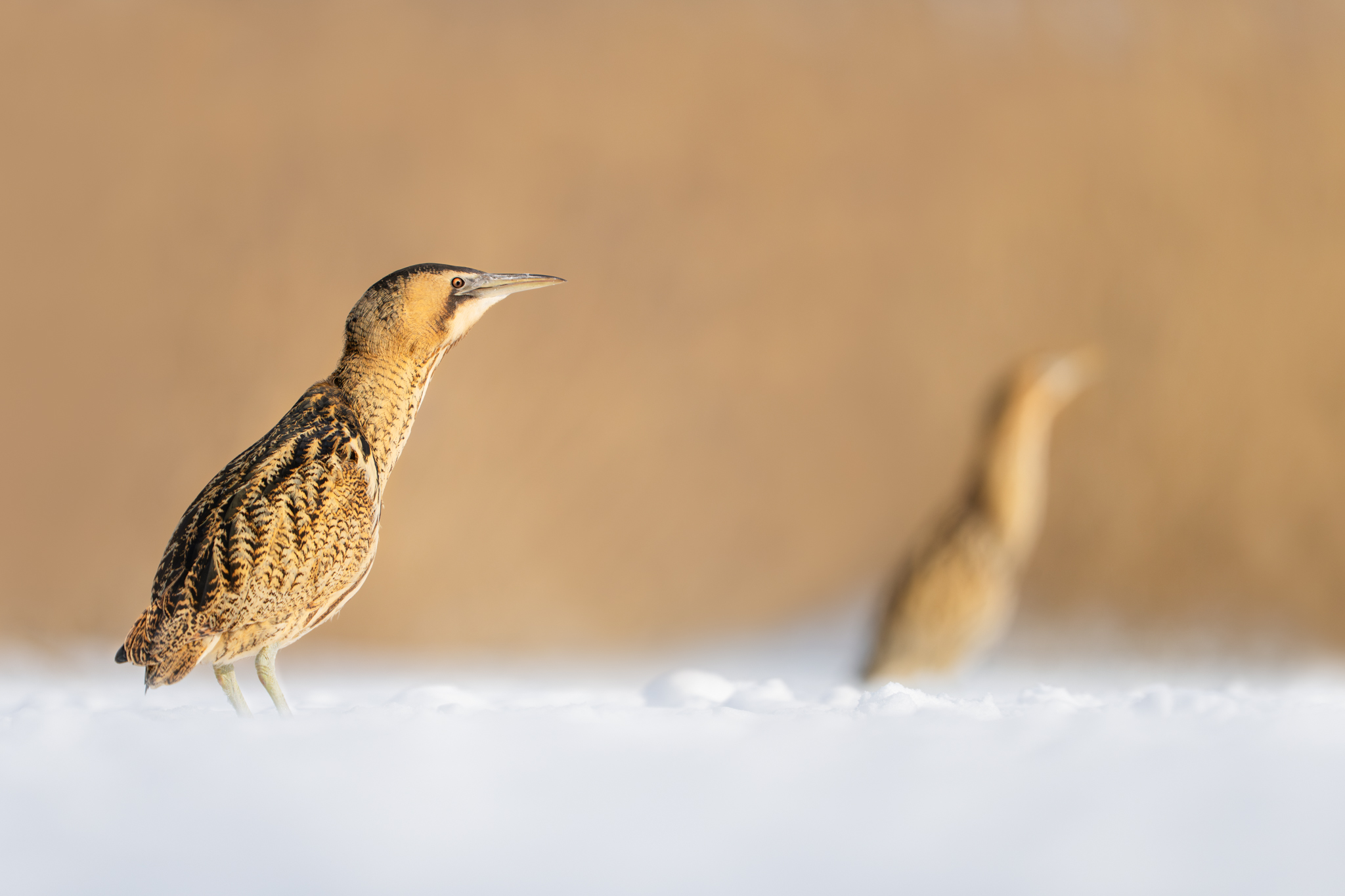
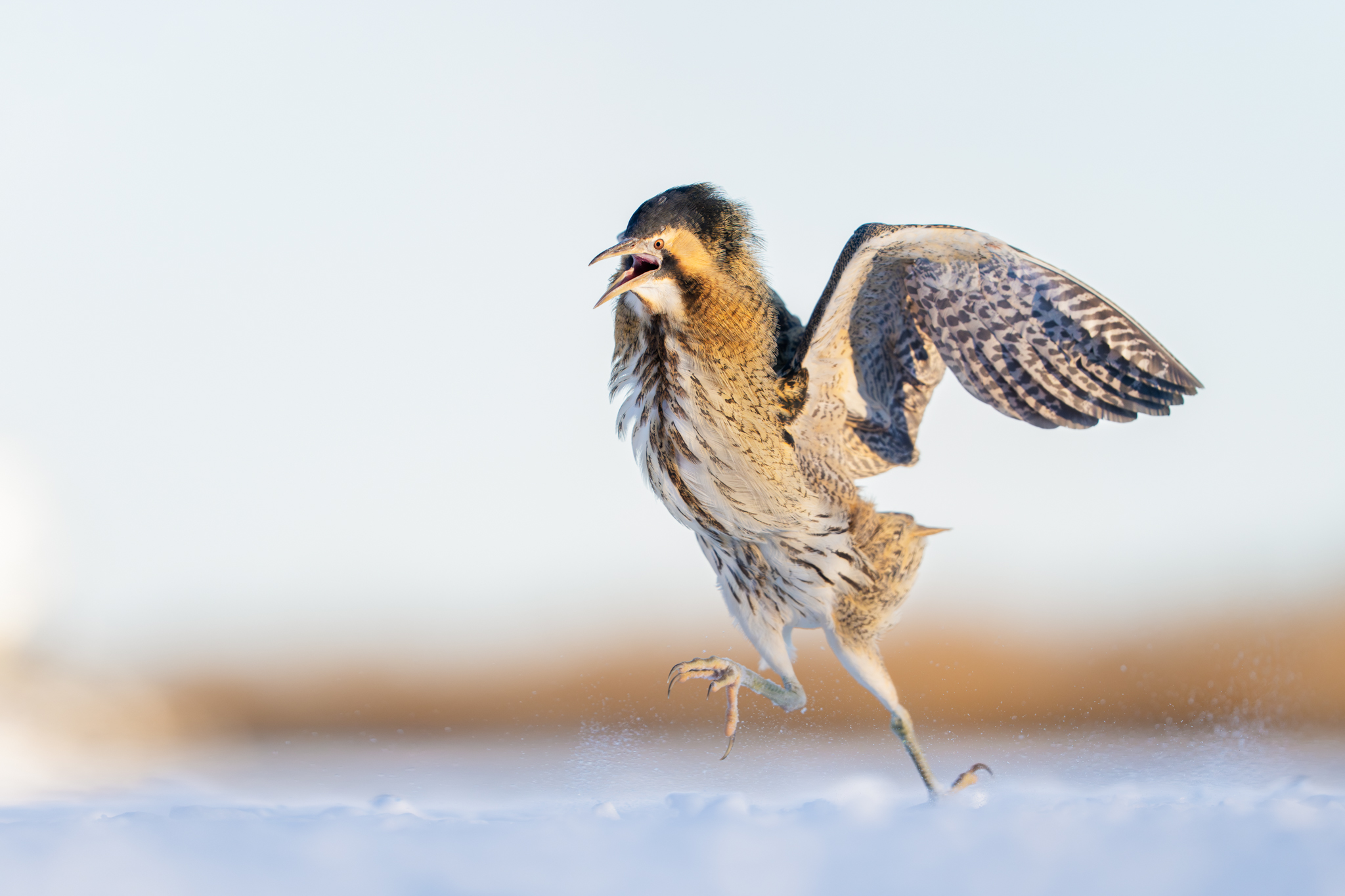
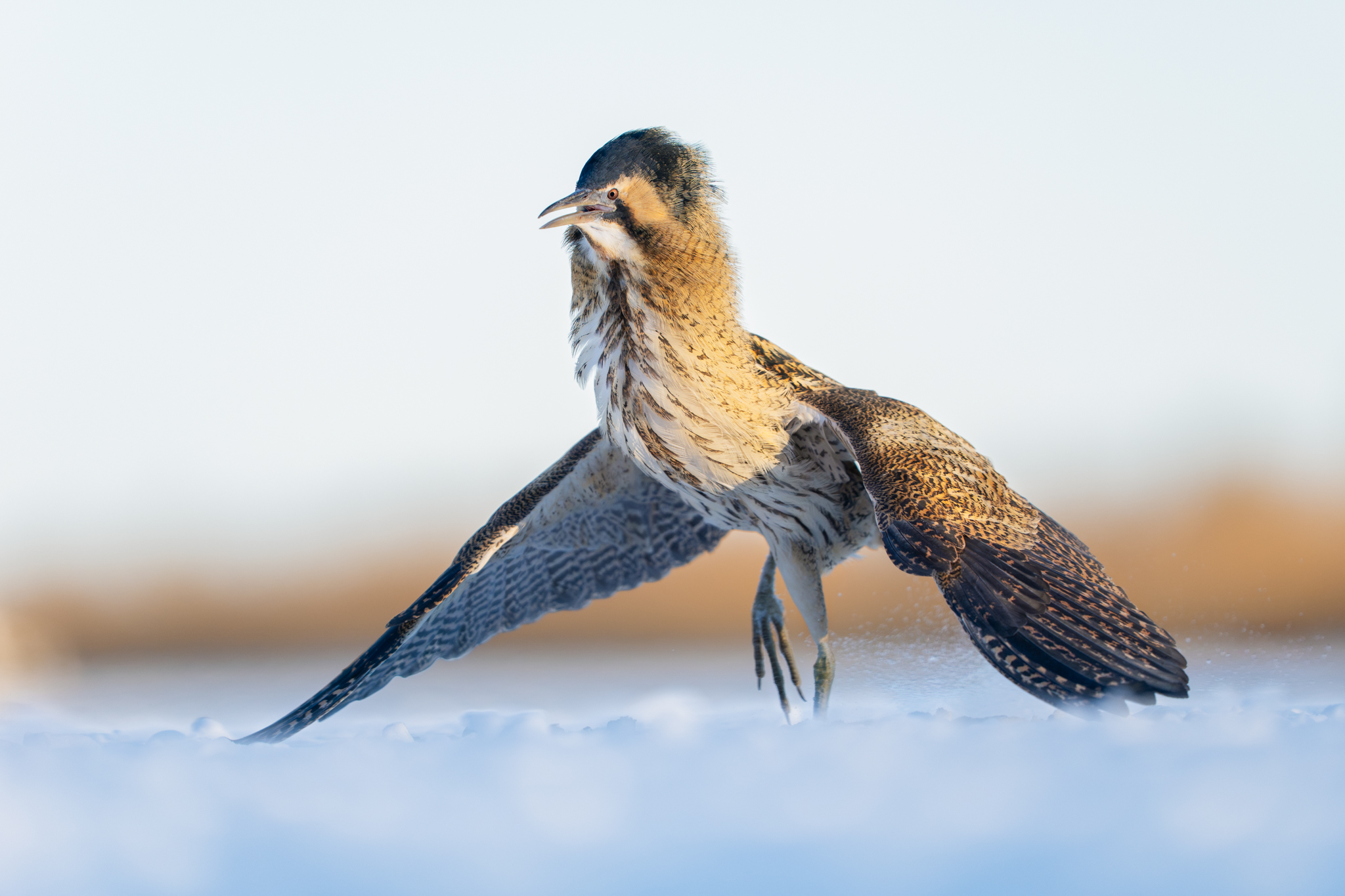
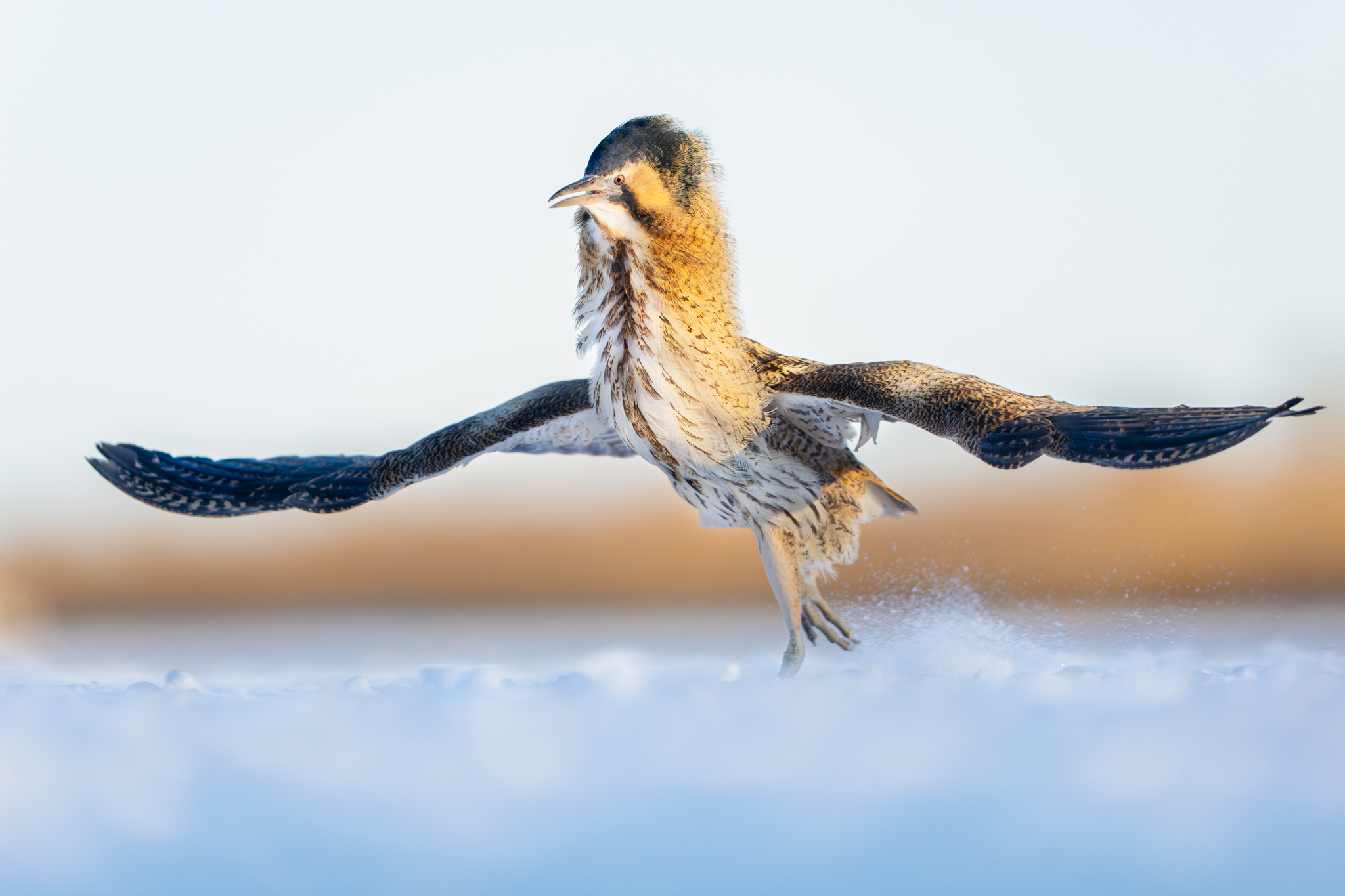
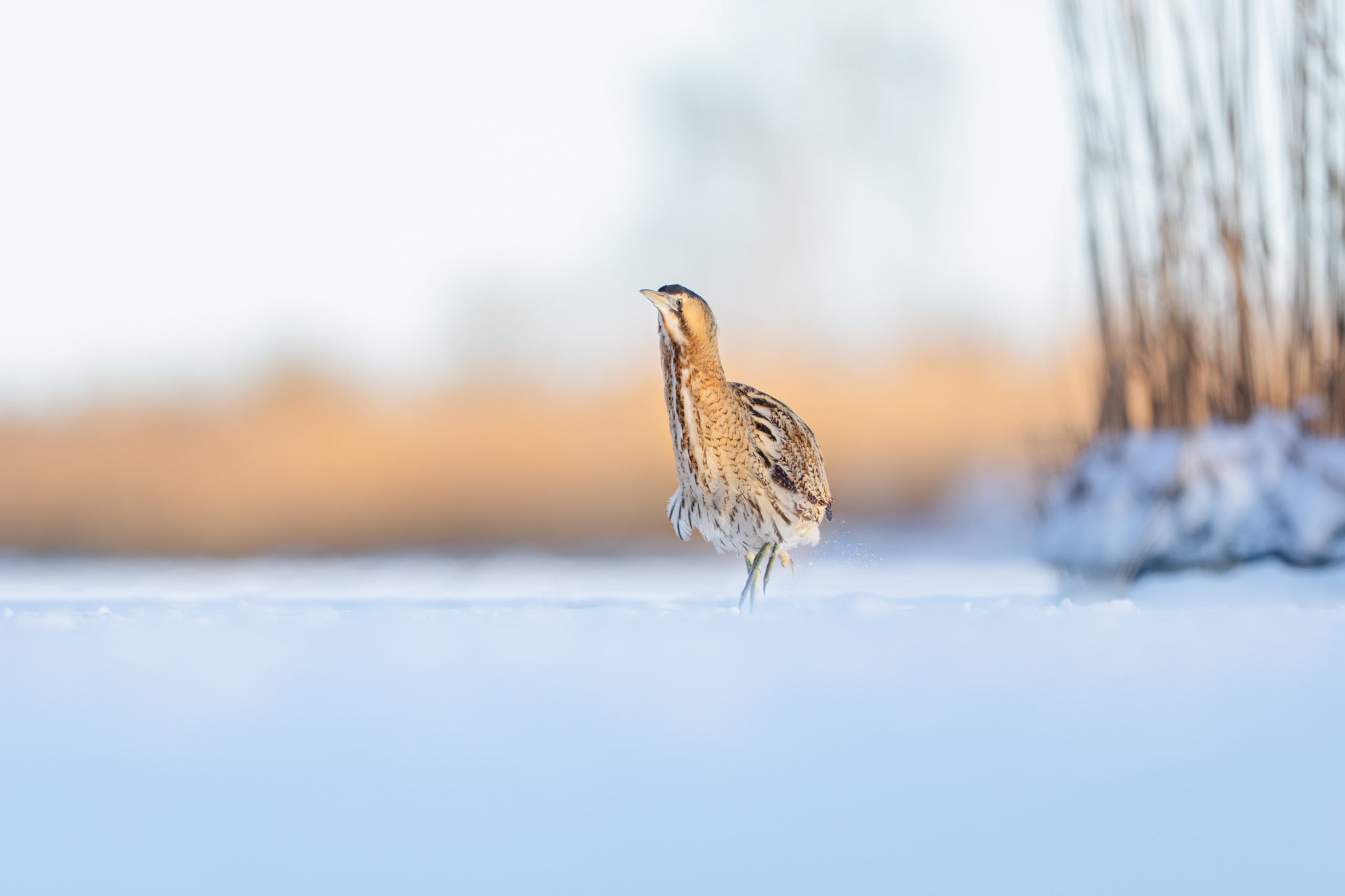
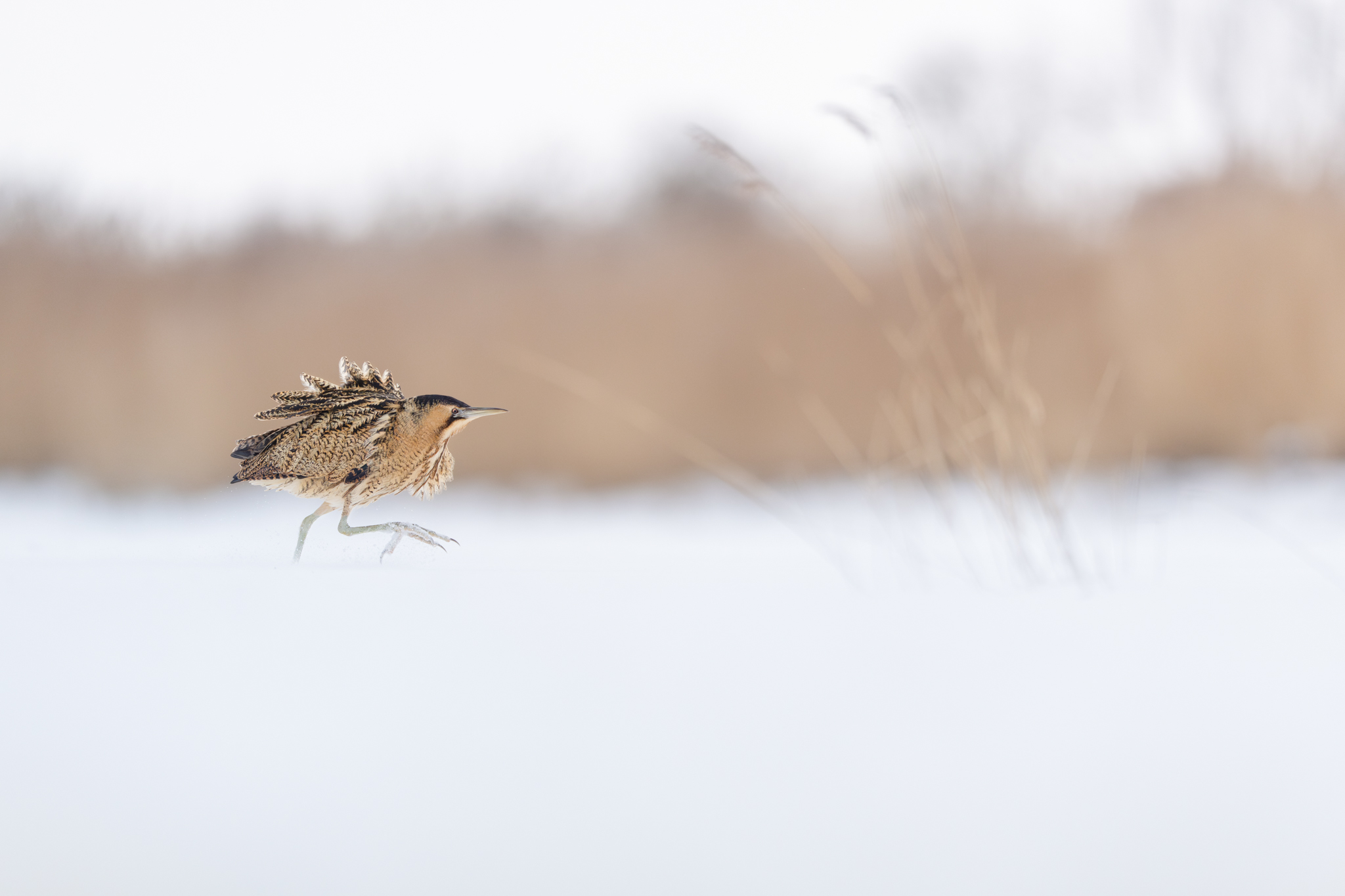
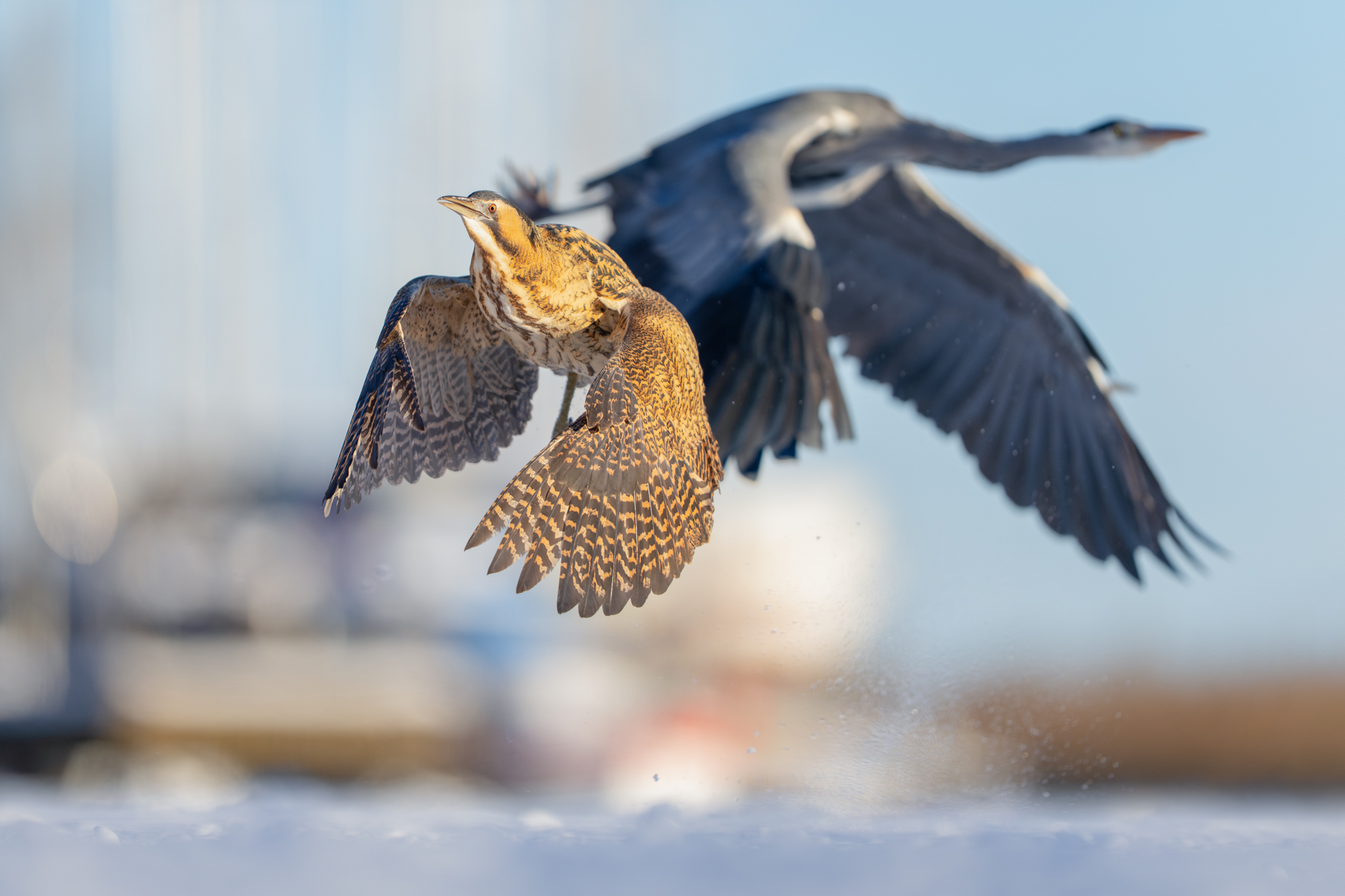
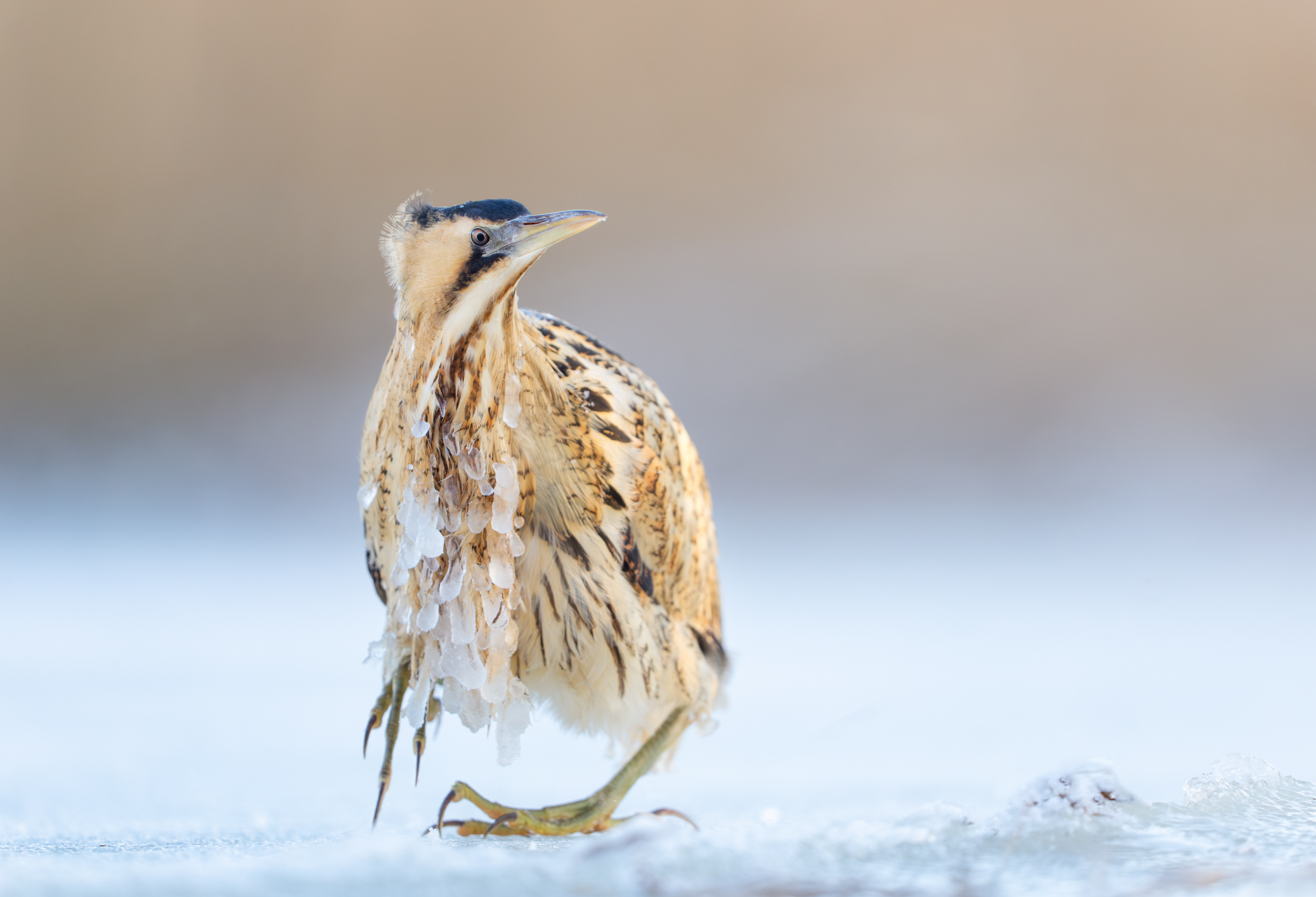
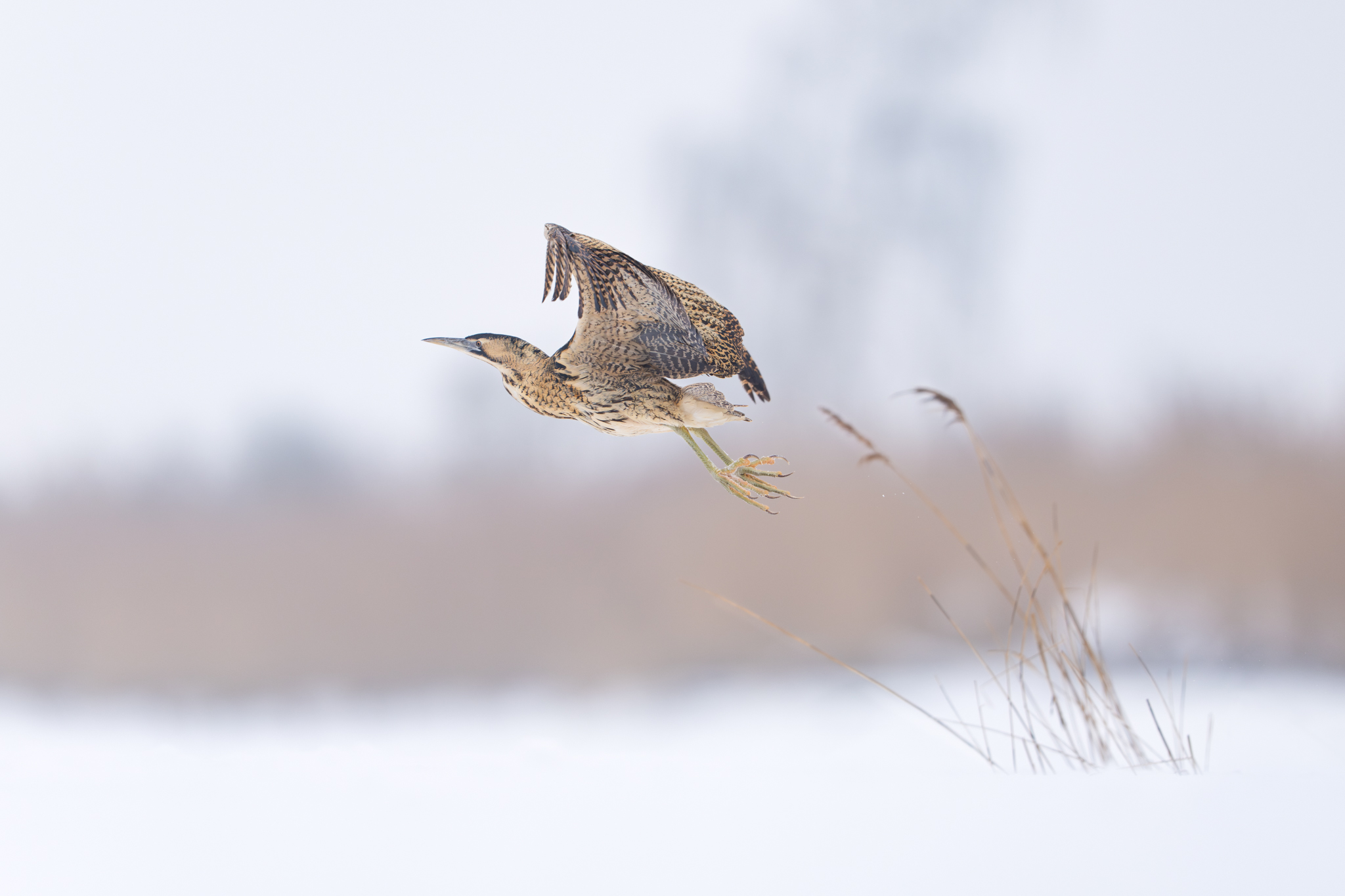
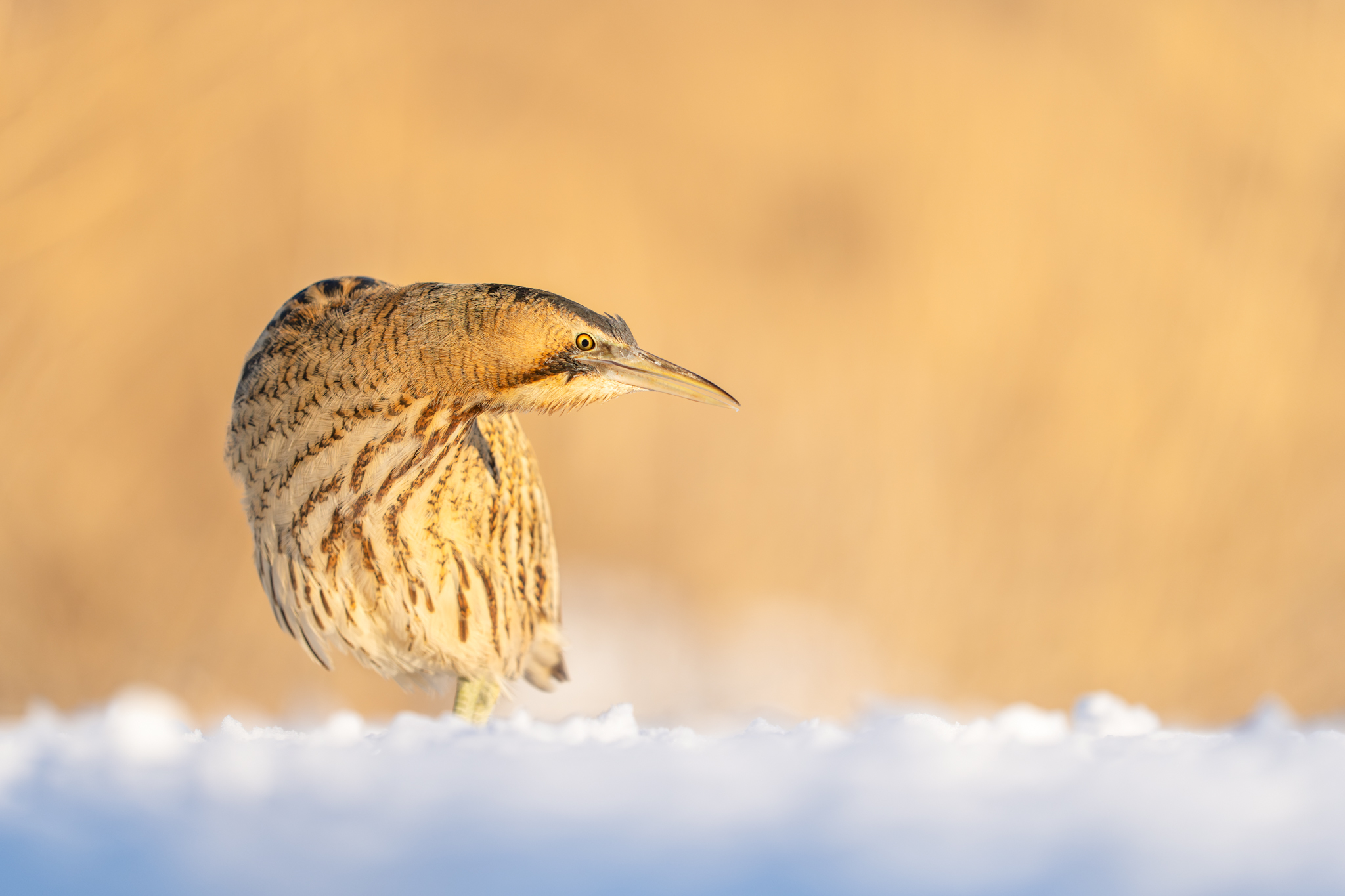
The bitterns that we observe either stopped flying back south at all and decided to winter in Poland, or they started flying back very early. I knew the location and scouted it right at the beginning of January. The bitterns were already there, but like in previous years, despite below-freezing temperatures, the water was unfrozen. However, in the middle of January, a brutal cold snap hit, with temperatures dropping below -20°C. The bay they stayed in froze solid. Even the Vistula River froze completely across 200 to 300 km of its final stretch. With no access to open water, the bitterns were essentially sentenced to death. And it wasn’t just a single bird; there were certainly more than 12 birds in the area, maybe up to 20. It was quite hard to count them.

Actually, a few years back in the Masovia voivodeship, there was a similar case. Unfortunately, it had a bad ending—the bittern did not survive. Here, local birders and photographers started feeding the bitterns with fish. Those who could took time off work, taking coordinated turns feeding them. Supermarket supplies of fresh fish ran dry. So where is the controversy? Well, I had really mixed feelings. I started taking pictures without baiting, with just one bittern present. However, it soon became obvious that there was no chance of the ice melting in the foreseeable future. Even more water froze, and there were no reeds with access to nearby water.

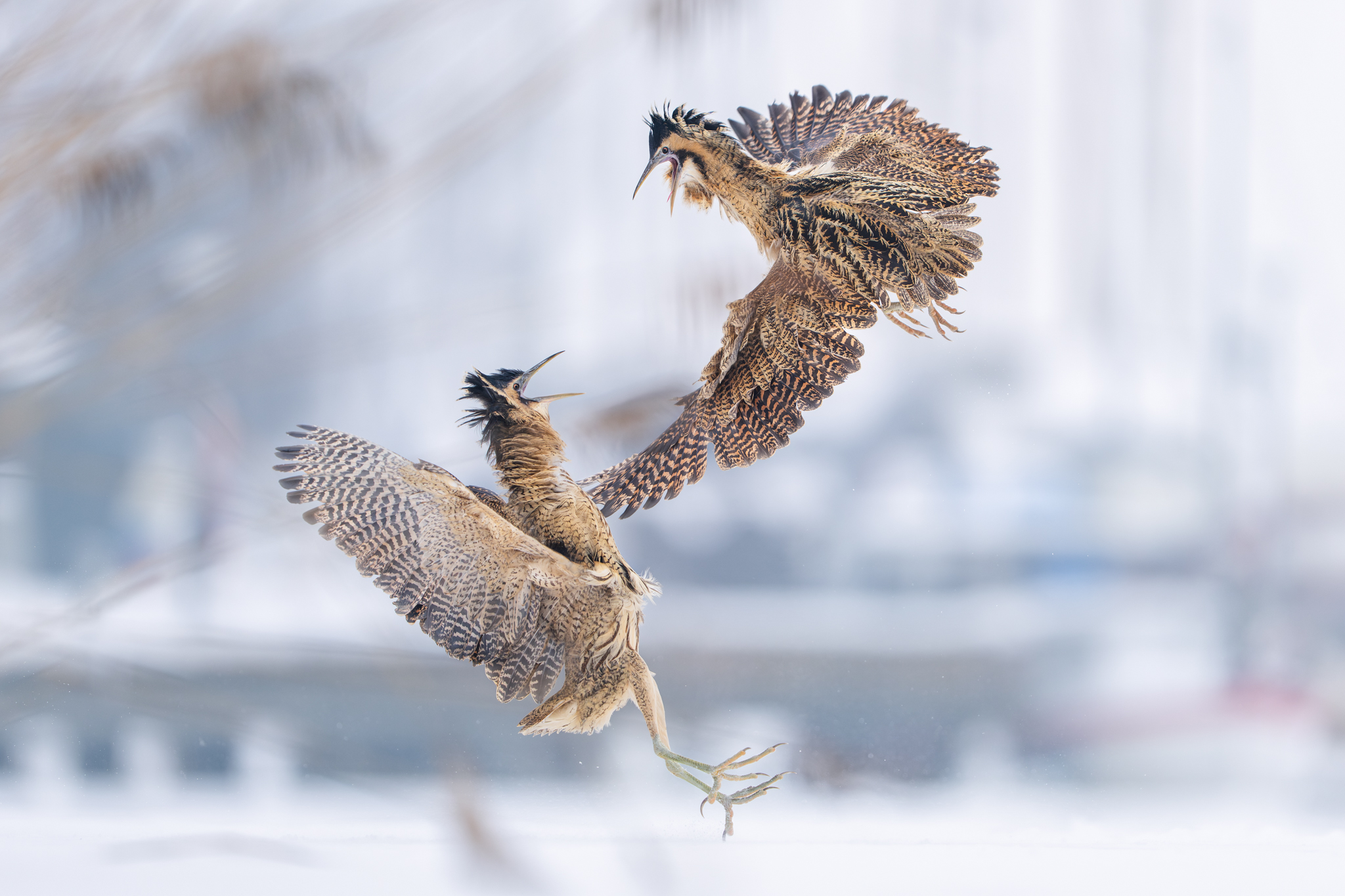
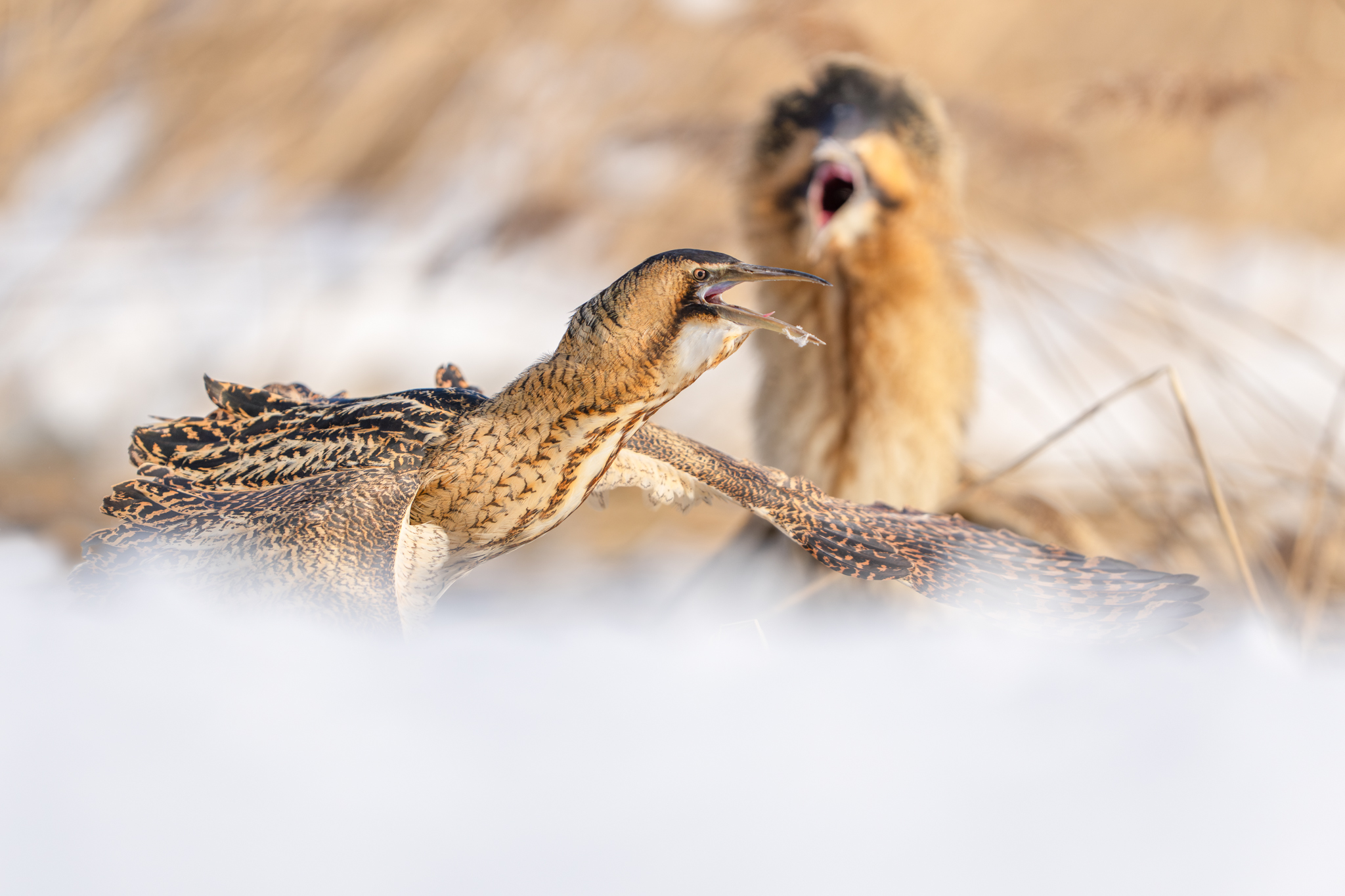
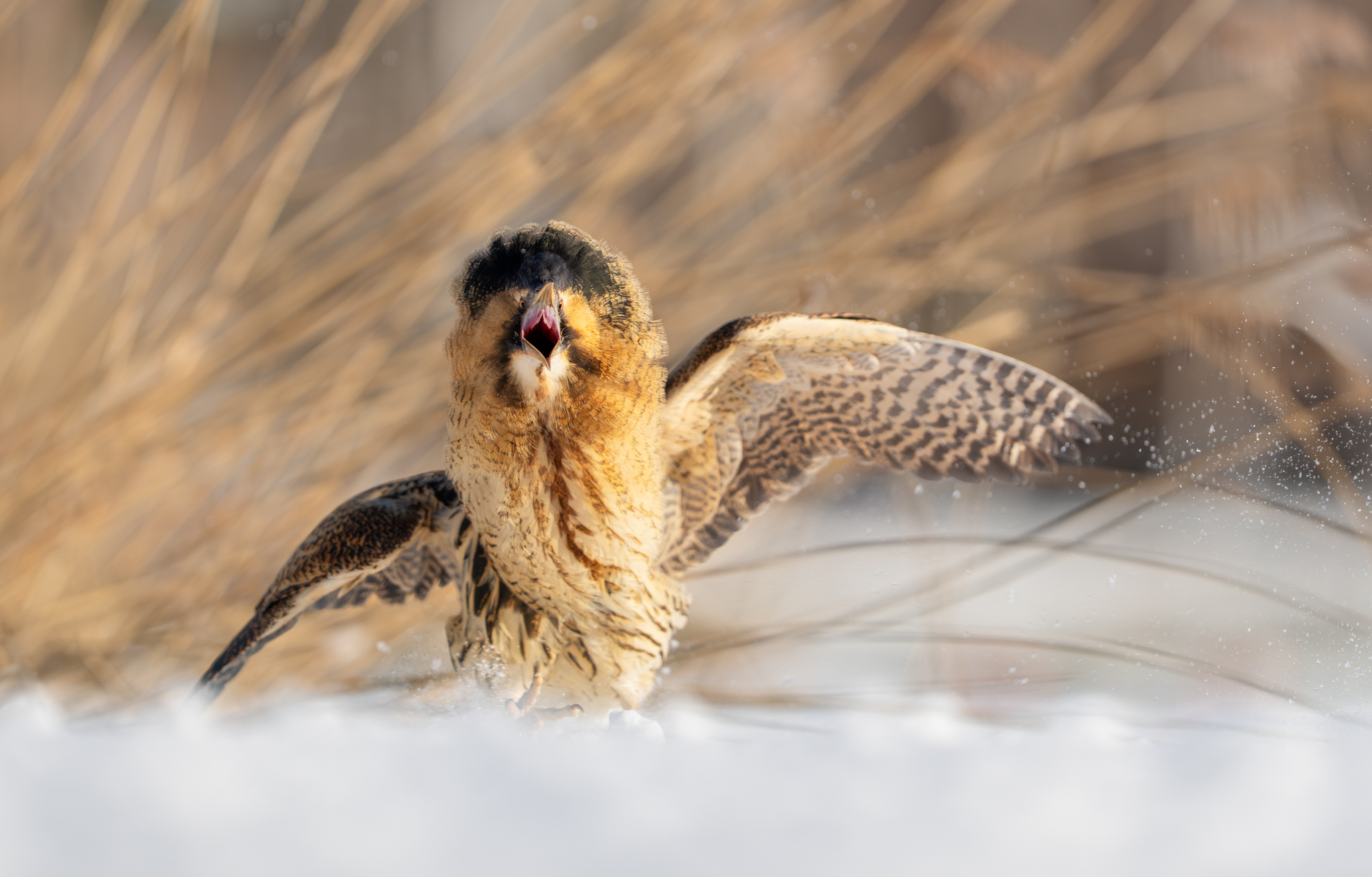
Then, the feeding started. People used good food (unsalted fish) and lower-quality food (giblets/viscera). Furthermore, this easy food source attracted even more birds—bitterns and egrets alike. Such high bird density caused quarrels, resulting in casualties. We didn’t spot any raptors nearby, as they had other food sources. The feeding not only attracted more birds but also lessened their fear of humans. They didn’t mind people at all. These are usually the most secretive and skittish bird species imaginable! Now, there was no hiding, no camouflage. Dozens of people visited daily from our voivodeship, the rest of the country, and even abroad. And it was a rather loud crowd—lying down, sitting, standing, just watching or taking photos, often throwing food right into the perfect spot for a picture. However, without those who fed them regularly and those who fed them whenever they could visit, the birds would have certainly died. What was ethical and right to do, and what was not?
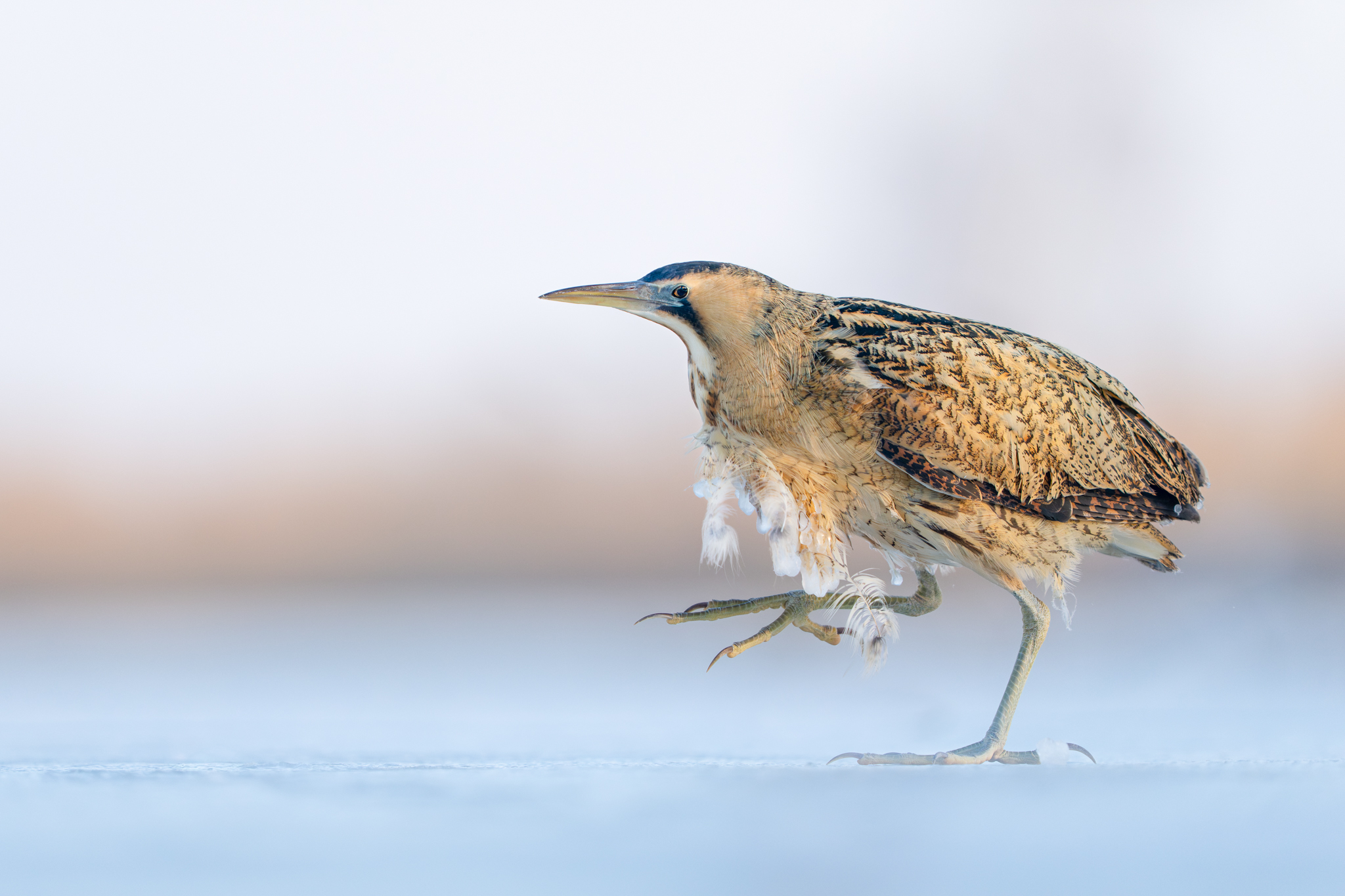
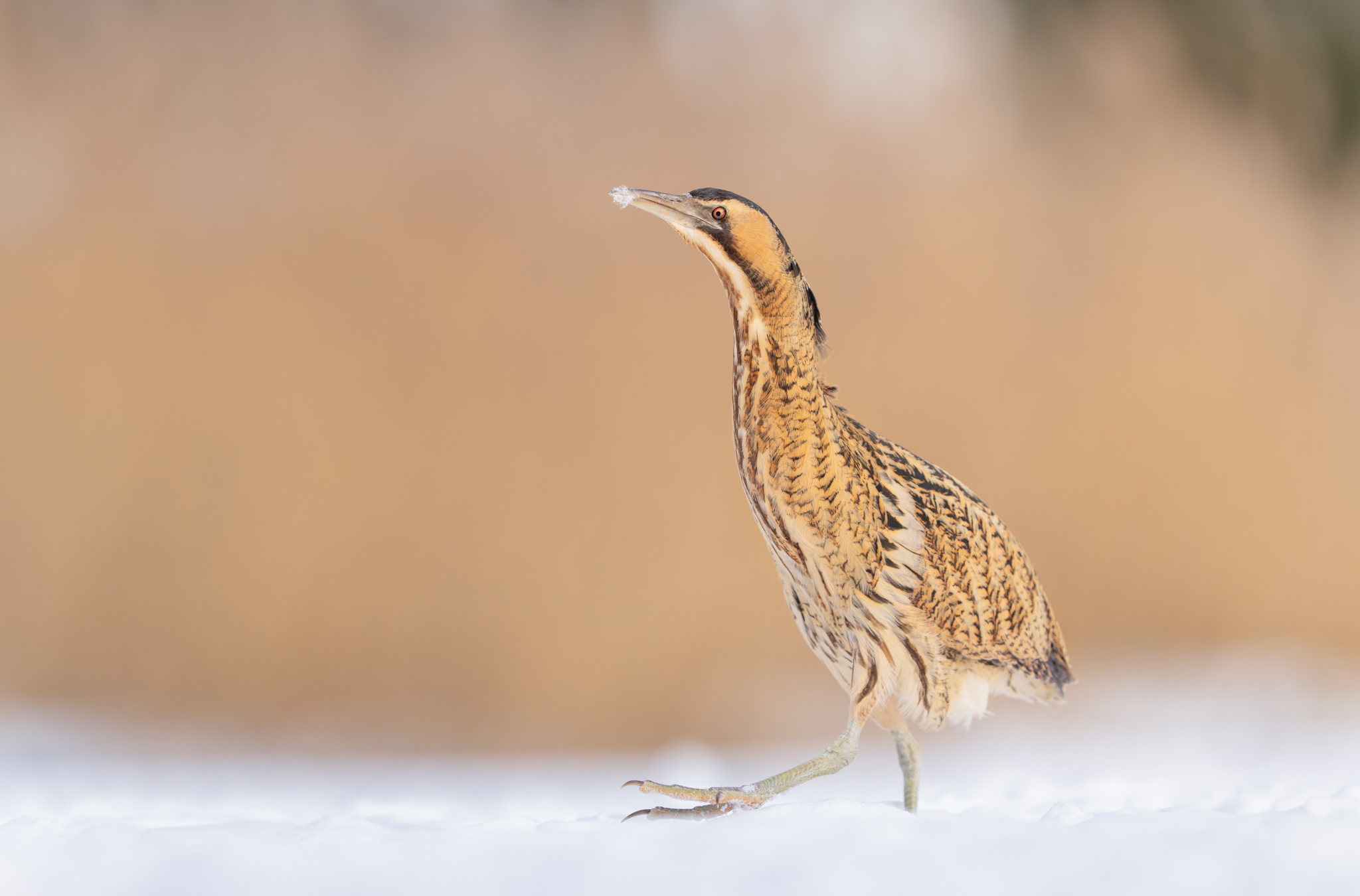
Was feeding them the only ethical choice? Did such a large crowd do the birds harm, or did it actually allow them to survive due to a steady influx of food? Were the casualties caused by the dense concentration of birds justified by the greater good of more birds surviving overall? Or maybe no human intervention was the most ethical route. After all, many animals die during winter, especially sick ones, like the many scabies-infested mammals we have around. I cannot say for sure that I have definitive answers to these questions. We should certainly protect nature. But are these questions even valid when, just a few meters away from the bitterns, there is an enormous construction site where hundreds of forest acres were cut down and wetlands were drained?

Battling the Extreme Cold: Gear and Challenges

From a photographic point of view, this was the chance of a lifetime to see these beautiful birds up close and observe their behavior in thinned-out reeds. I was able to test my endurance to the cold and see if I could dress properly for the extreme weather.

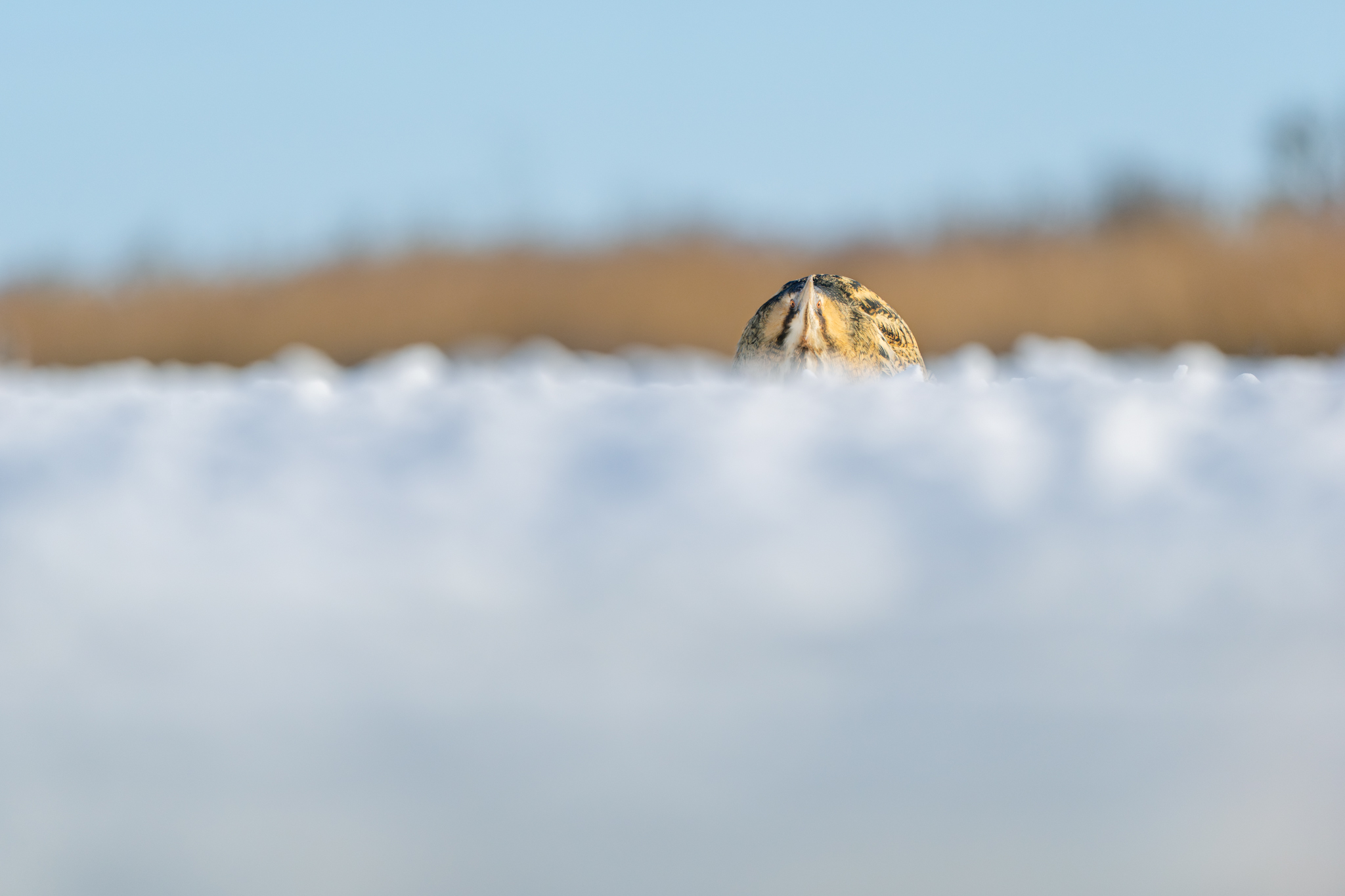
So, what worked for me, and what were the greatest challenges? The cold, for sure. Even though the birds were used to human presence, I wanted to stay low, not only to get good angles but also to disturb them as little as possible. An insulating mat was a must. A 2 cm-thick foam one worked well, but a 5 cm-thick self-inflating one was even better. Regarding clothes: a thermal base layer followed by pants and a hoodie, a synthetic down jacket, down pants (!), and a thick outer ski jacket insulated me well. My hands were well protected by convertible mittens with removable tops.

As always, my feet were the most vulnerable to the cold. I have excellent wellies made for fishermen, rated for down to -70°C, yet my feet still felt the coldest. Maybe next winter I will opt for a super warm sleeping bag. I hardly had to move anyway, perhaps only shifting a bit when the back pain became unbearable. That was the second biggest challenge after the cold: staying in one position for a long time, essentially holding a plank. Funnily enough, a gimbal was a nice addition at first, but after a while, I stopped using it. It was just another piece of gear to carry.

Regarding lenses, 600mm was definitely too long, and even 400mm was too much at times. I think a 300mm lens would have been the most comfortable to use. There was only a very small window with a distant background, so a zoom lens yielded rather sharp backgrounds. At times, I could even imagine a long portrait lens like a 135mm f/1.8 or a 200mm f/2 working perfectly.

Battling the Extreme Cold: Gear and Challenges

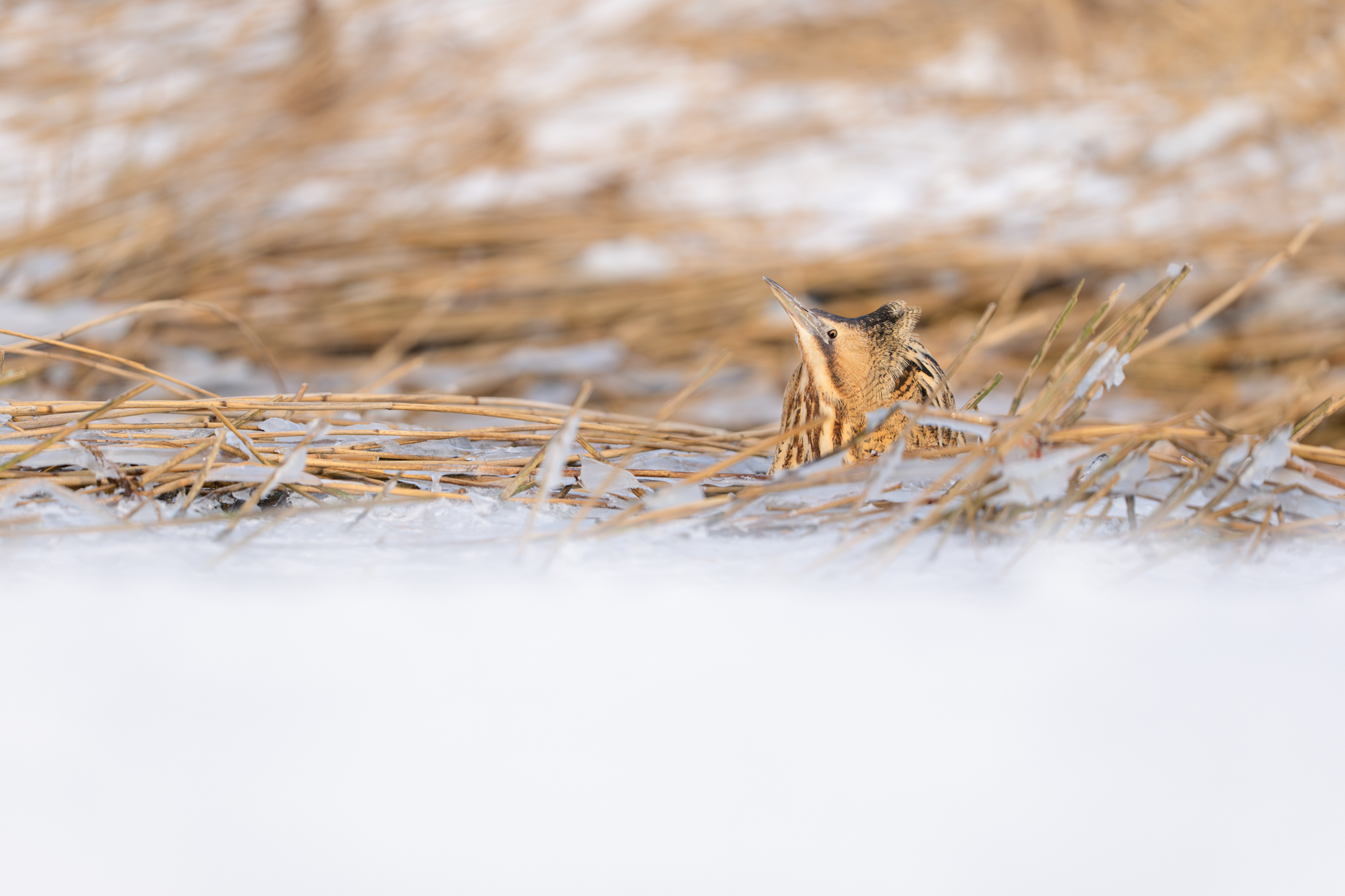
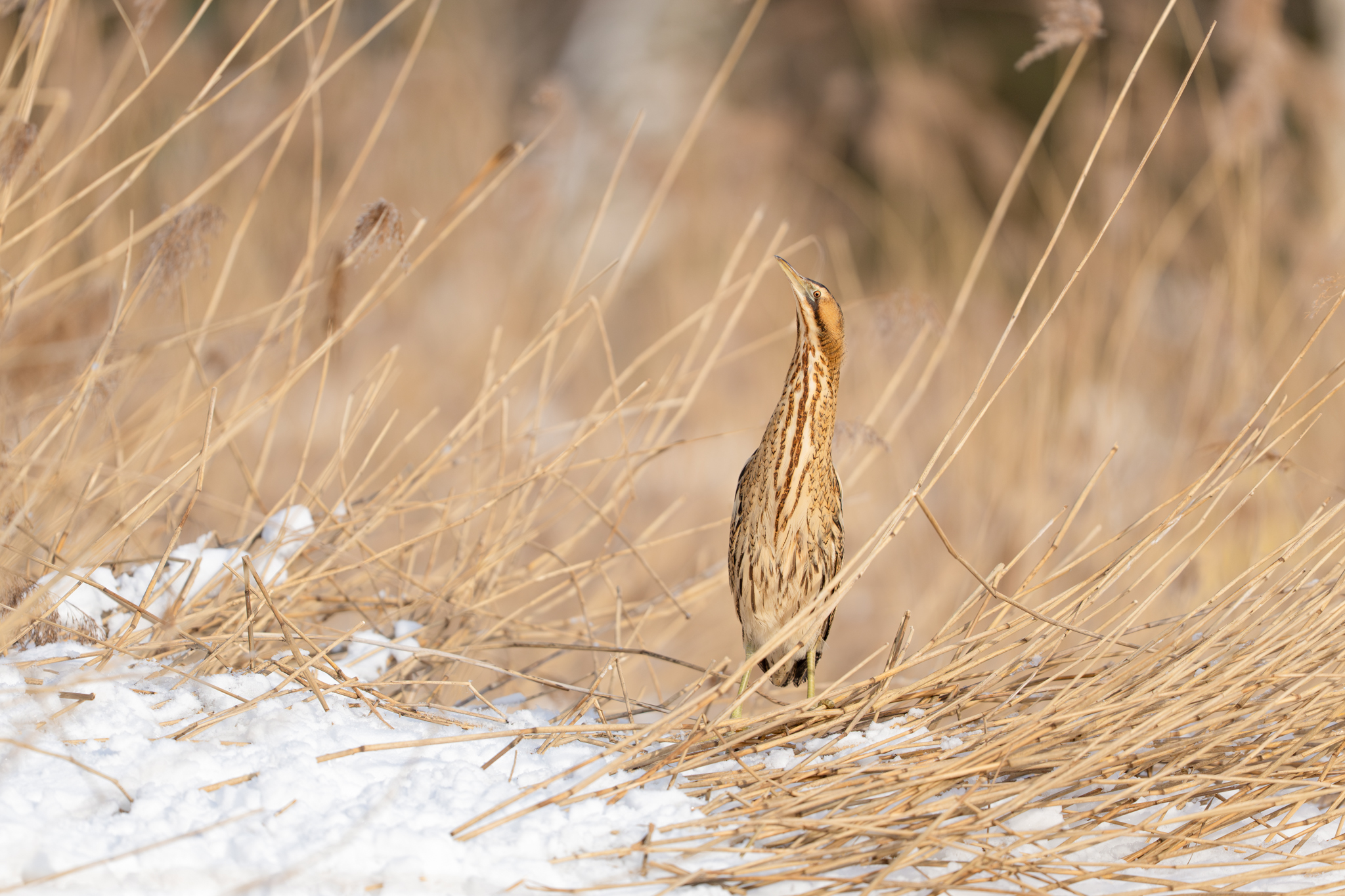
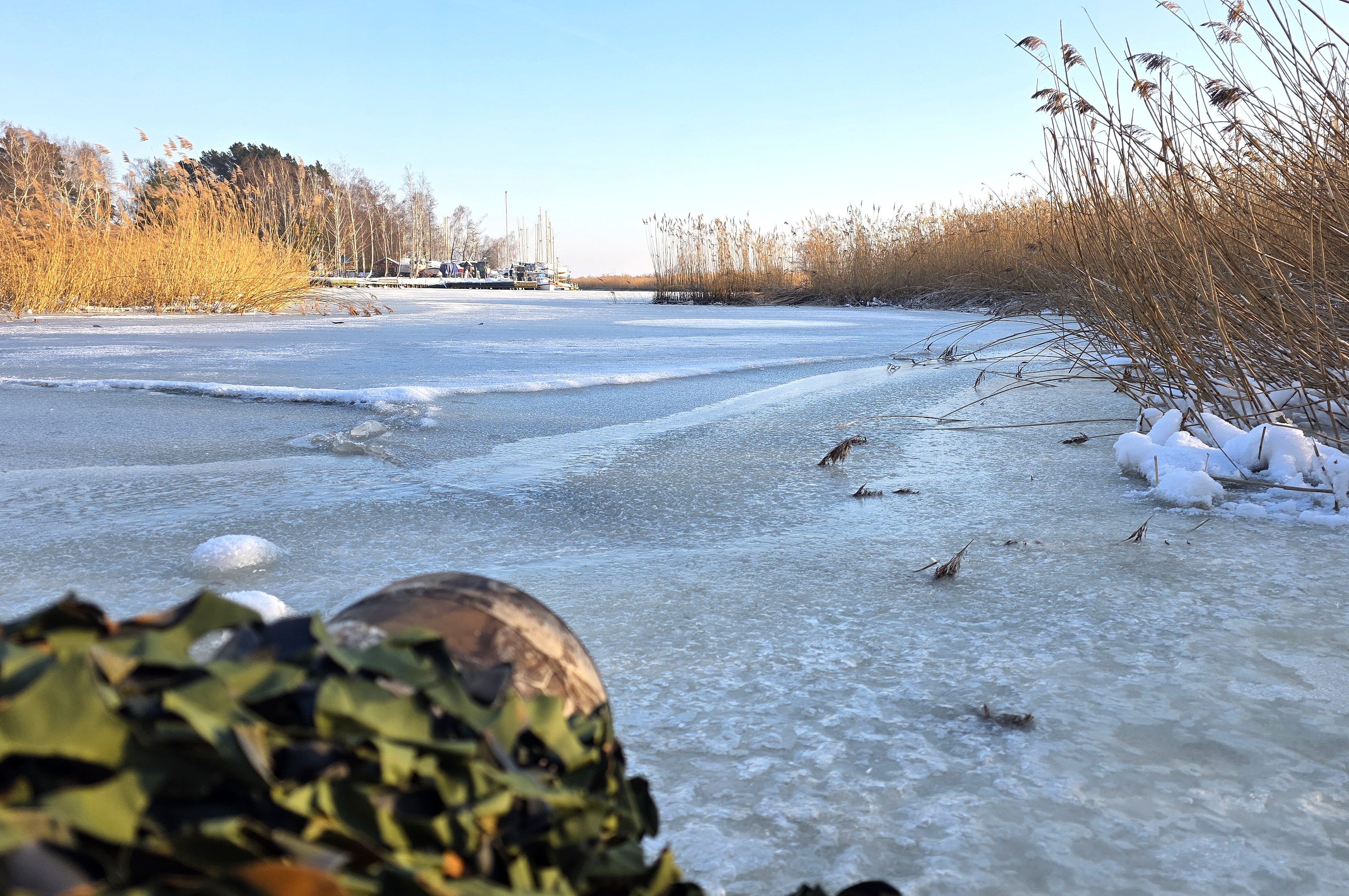
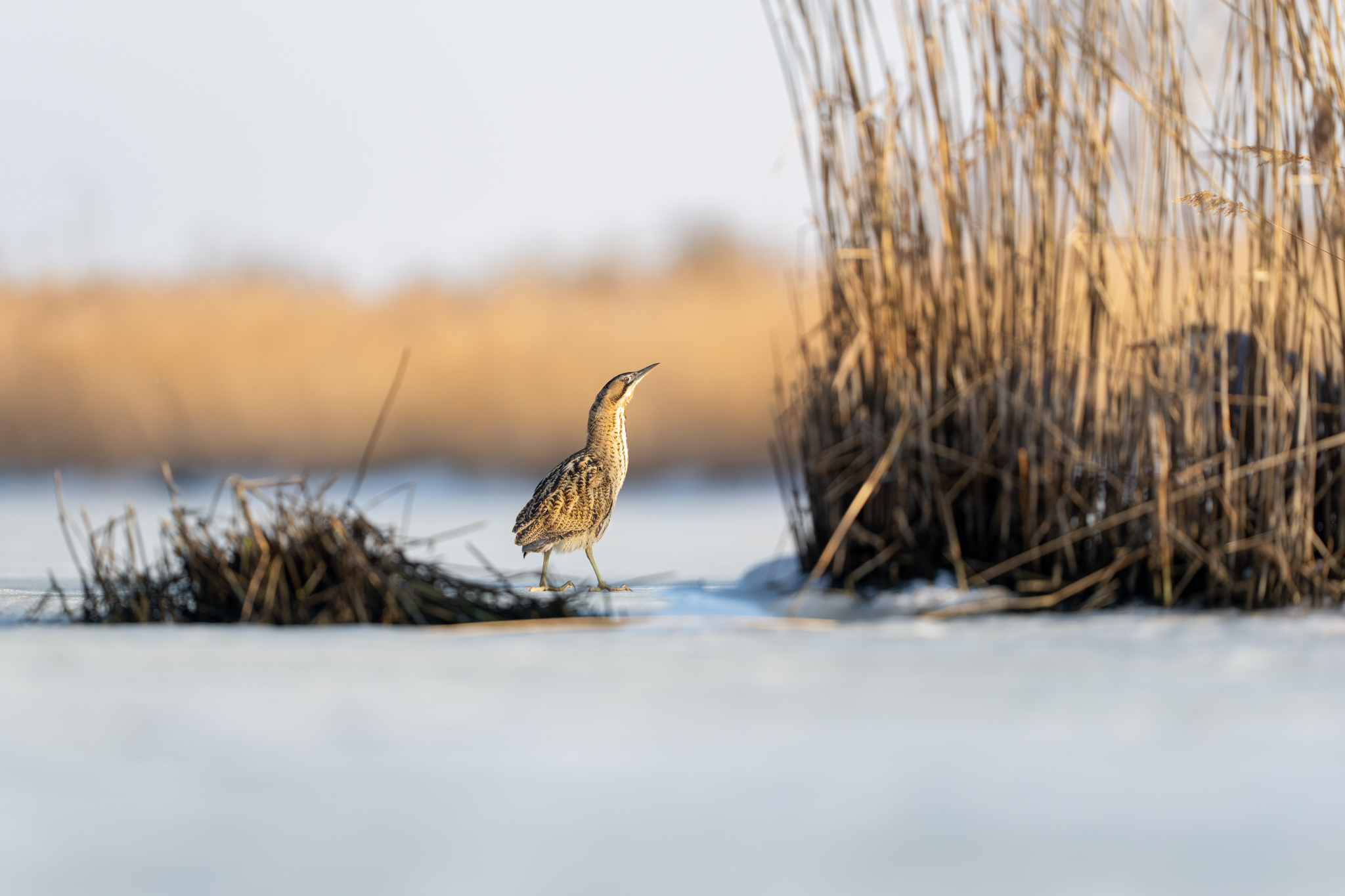
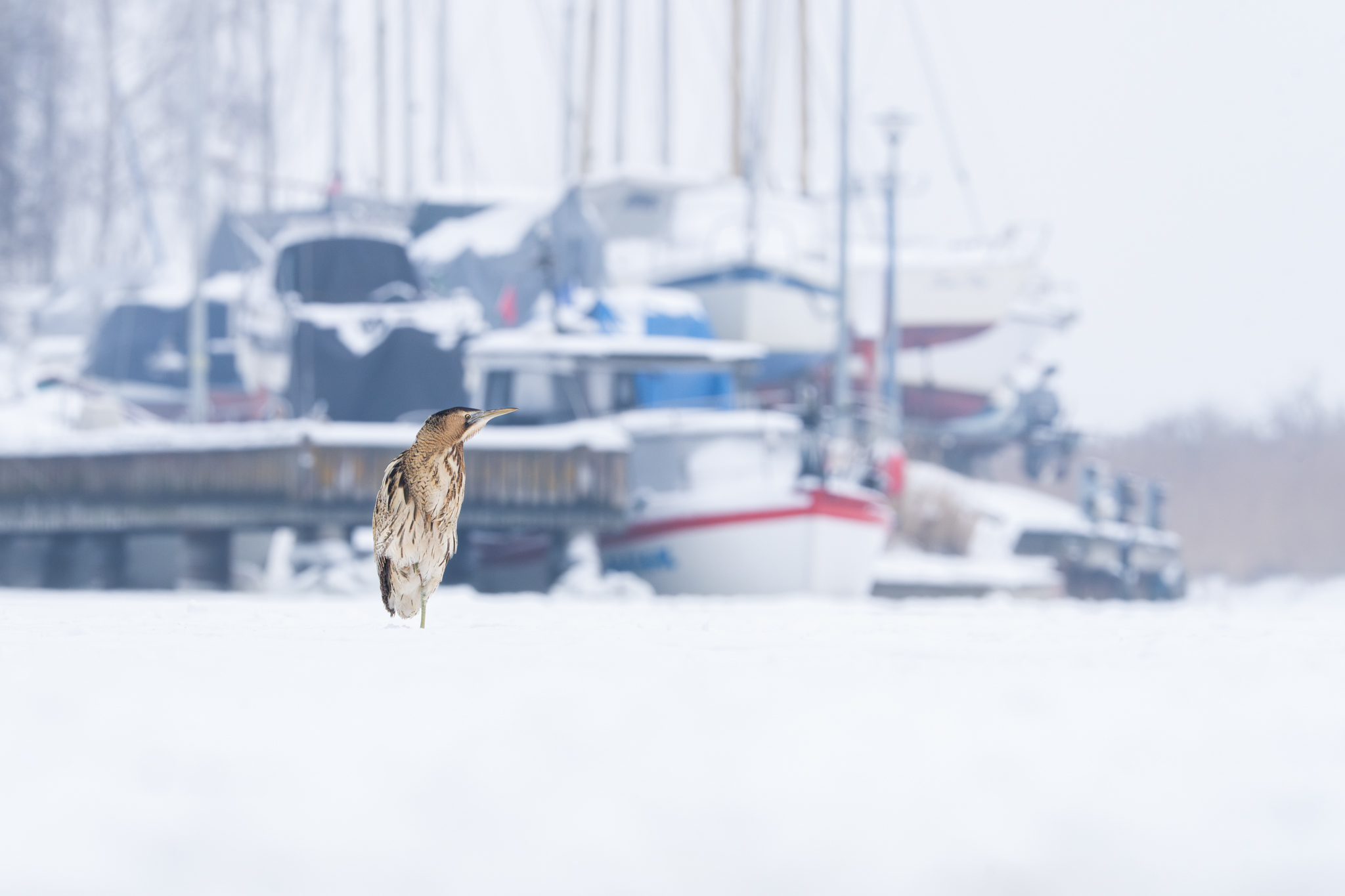
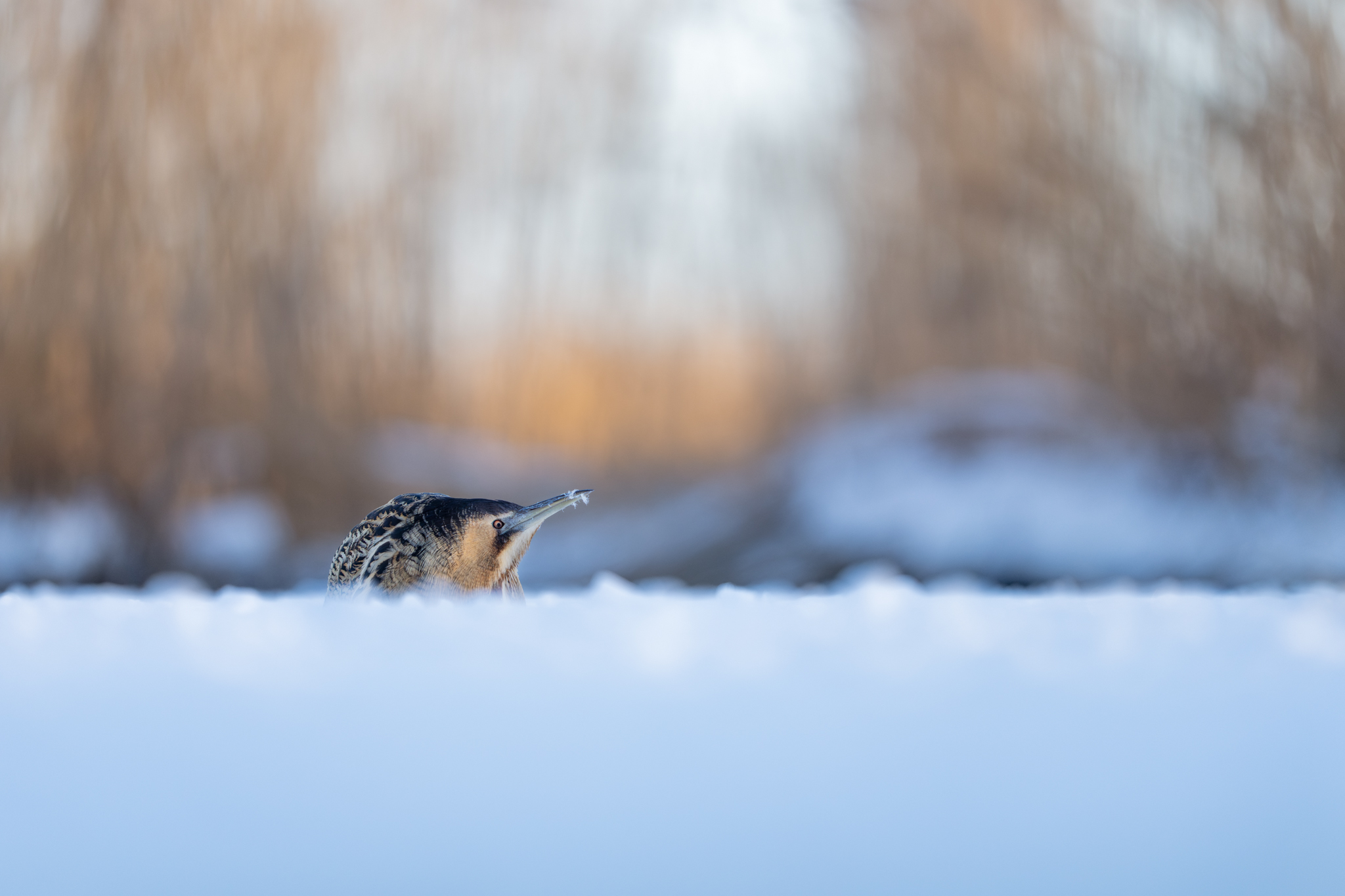
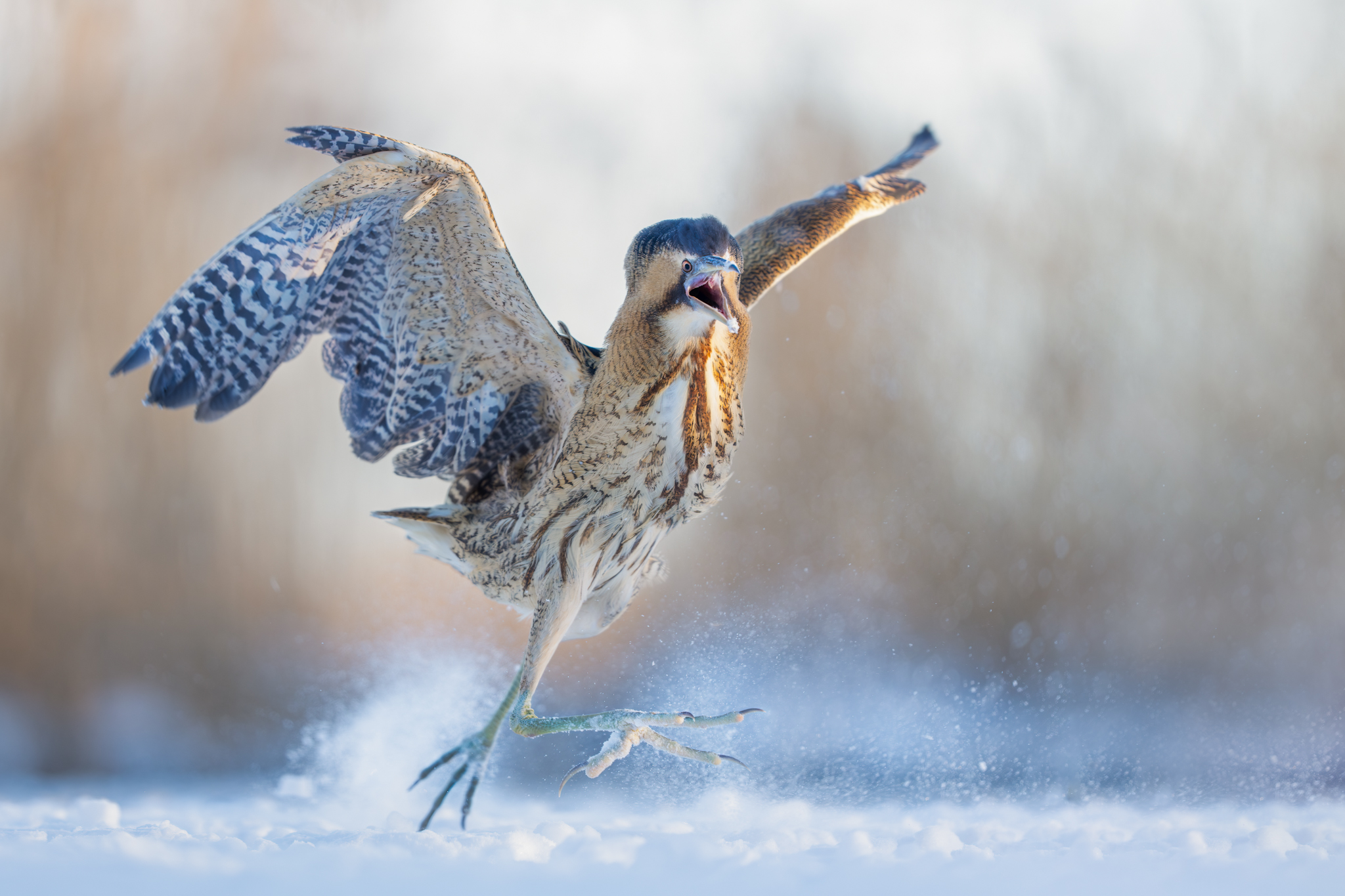
As you can imagine and see in the photos, the scene consisted mostly of frozen water with variable snow and ice coverage, and reedbeds. The area where the bitterns appeared on the scene was roundish with a narrow opening. In the distance, there was a marina full of wintering yachts and another stretch of reeds. Actually, over there the bitterns also chased each other and hunted for a while—as long as there was a bit of unfrozen water. 

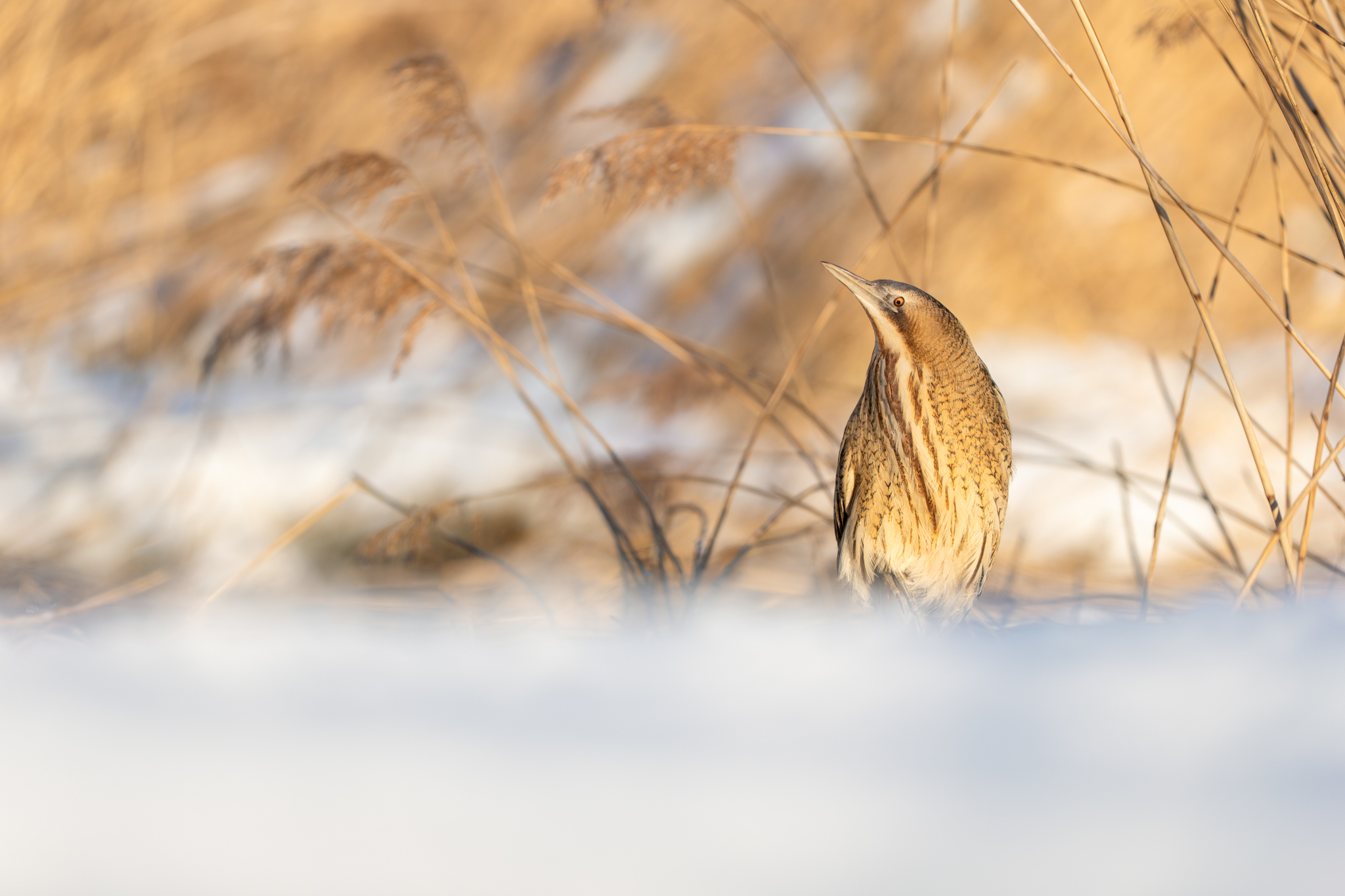
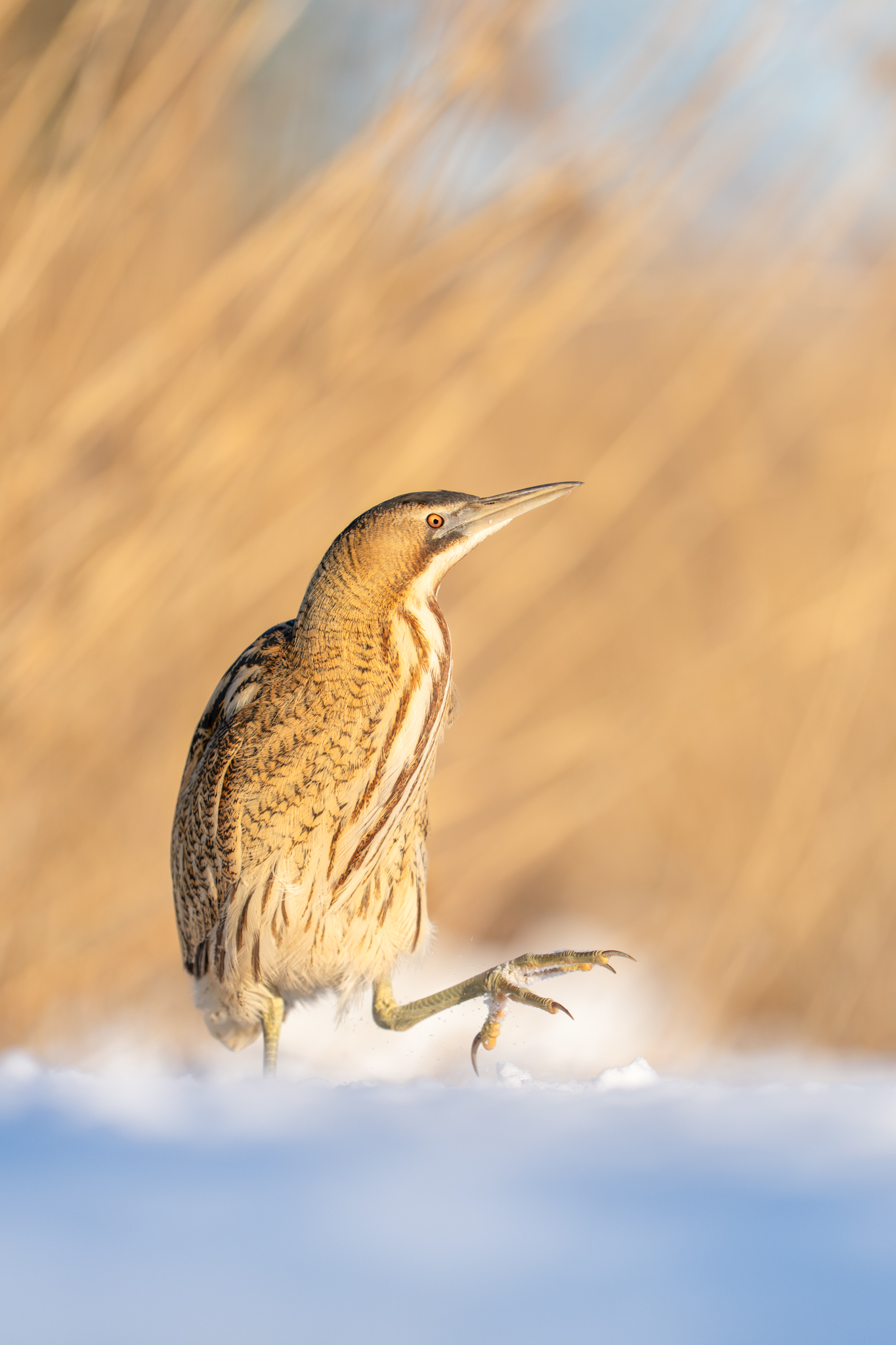
Getting a perfectly blurry background was tricky. Actually, there were just two positions to achieve that. One was in front of the bay outlet with distant reeds in the background. But the downside was that the bitterns rarely passed from one side of the reeds to the other. The other option was to position in a way that the reeds going on the left towards the marina were parallel to the lens and blurred nicely. However, in such a position, one side of the bay was almost crossed out from photographing. It is quite hard to explain. Nevertheless, including reeds in the composition was usually a must. A perfect portrait was obtainable but required taking smart angles.

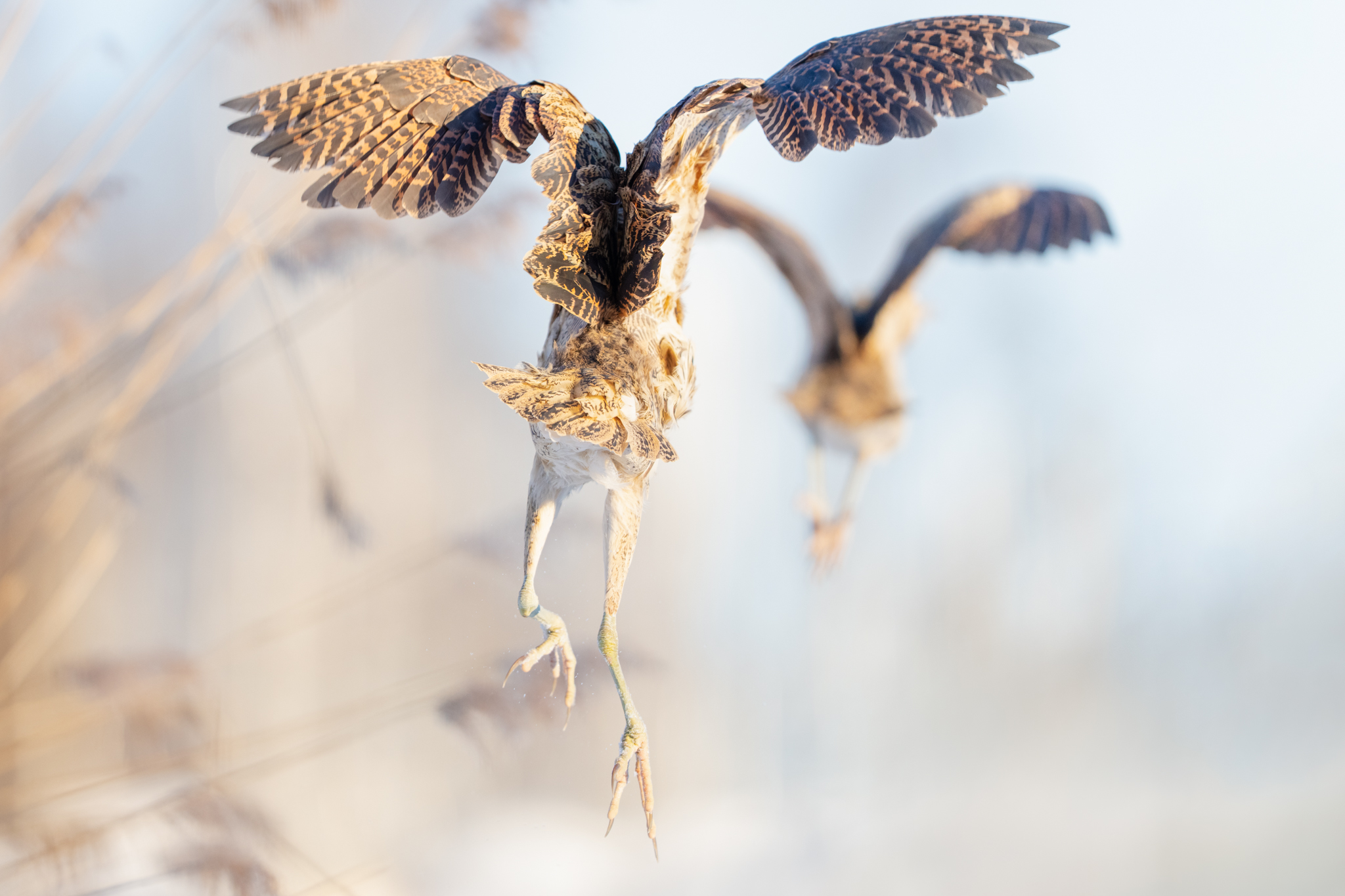
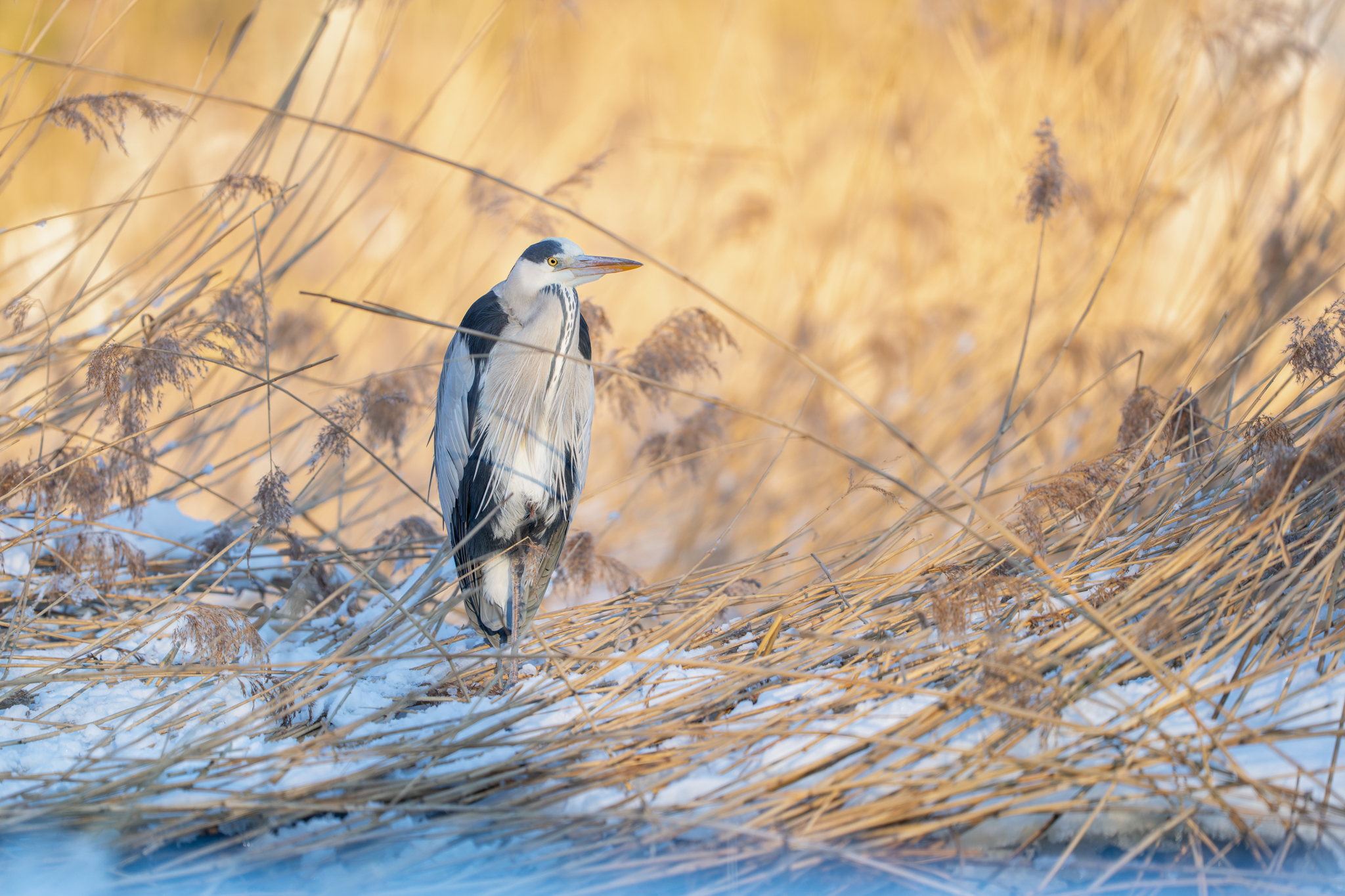
Moving further to the sides was out of the question. As you can see, the reeds stretched further out from the bay on either side. Those reeds were the kingdom of the bitterns, with only a few visits from herons. The bitterns either moved along the reeds or flew from one part to another, often as the result of a squabble. Nevertheless, no one tried to position themselves in that area, so the bitterns and herons alike seemed quite safe. They were free to move around and often decided to get very close to the photographers.

On the bright side, the snow cover allowed for fast shutter speeds with virtually any lens at reasonable ISO values. Snow reflects light, so even in cloudy conditions, there is plenty of it for portraits and action alike. Operating at an ISO between 500 and 3200 yielded shutter speeds of at least 1/1000s, or even a few times faster. I usually start shooting at the sensor’s dual-gain ISO value, manually selecting the aperture and shutter speed while keeping an eye on the auto ISO. For me, choosing a faster shutter speed is a no-brainer, even at the expense of a higher ISO. This is especially true if it is possible to keep the ISO in the 500-1600 range.

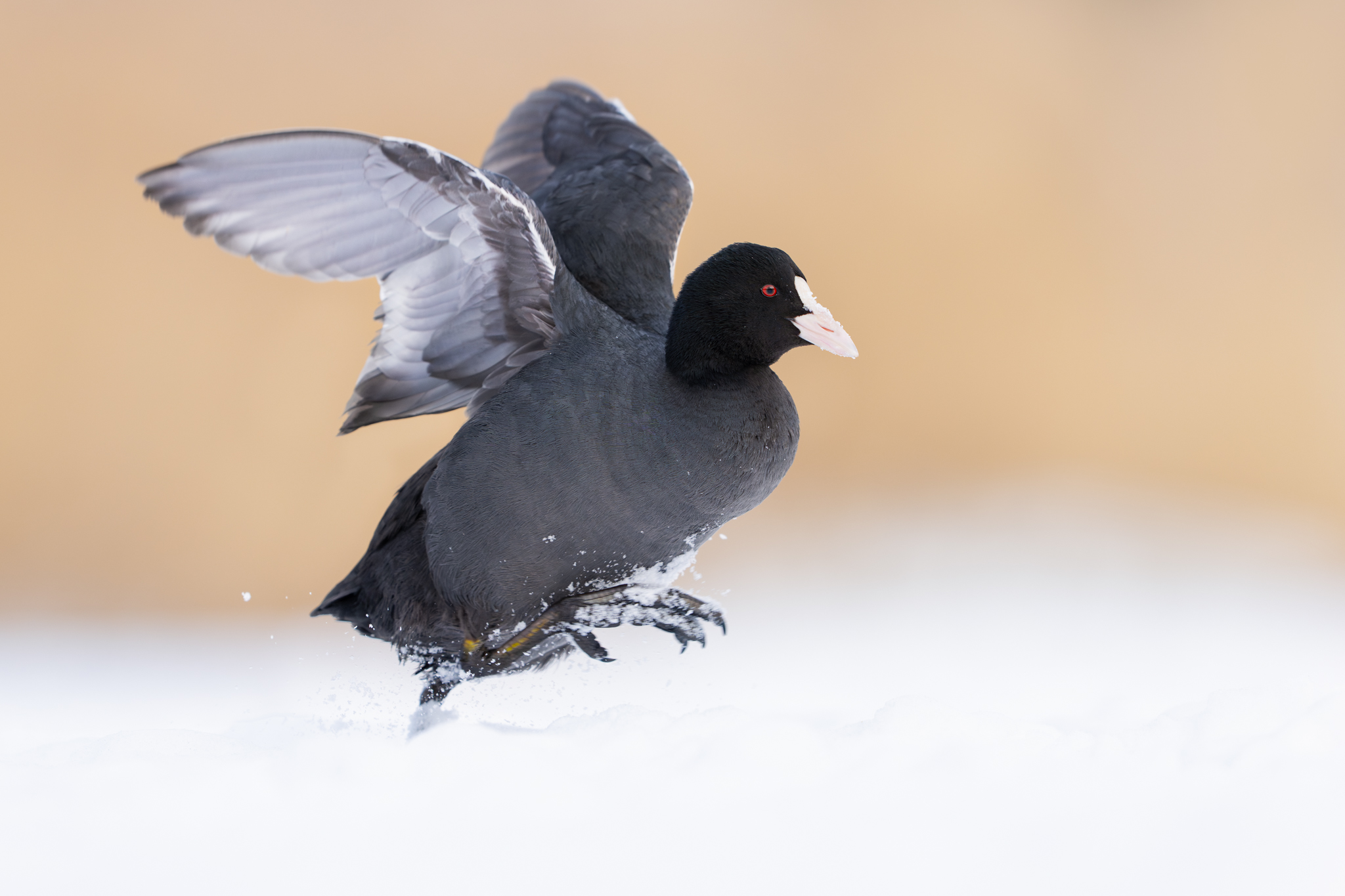
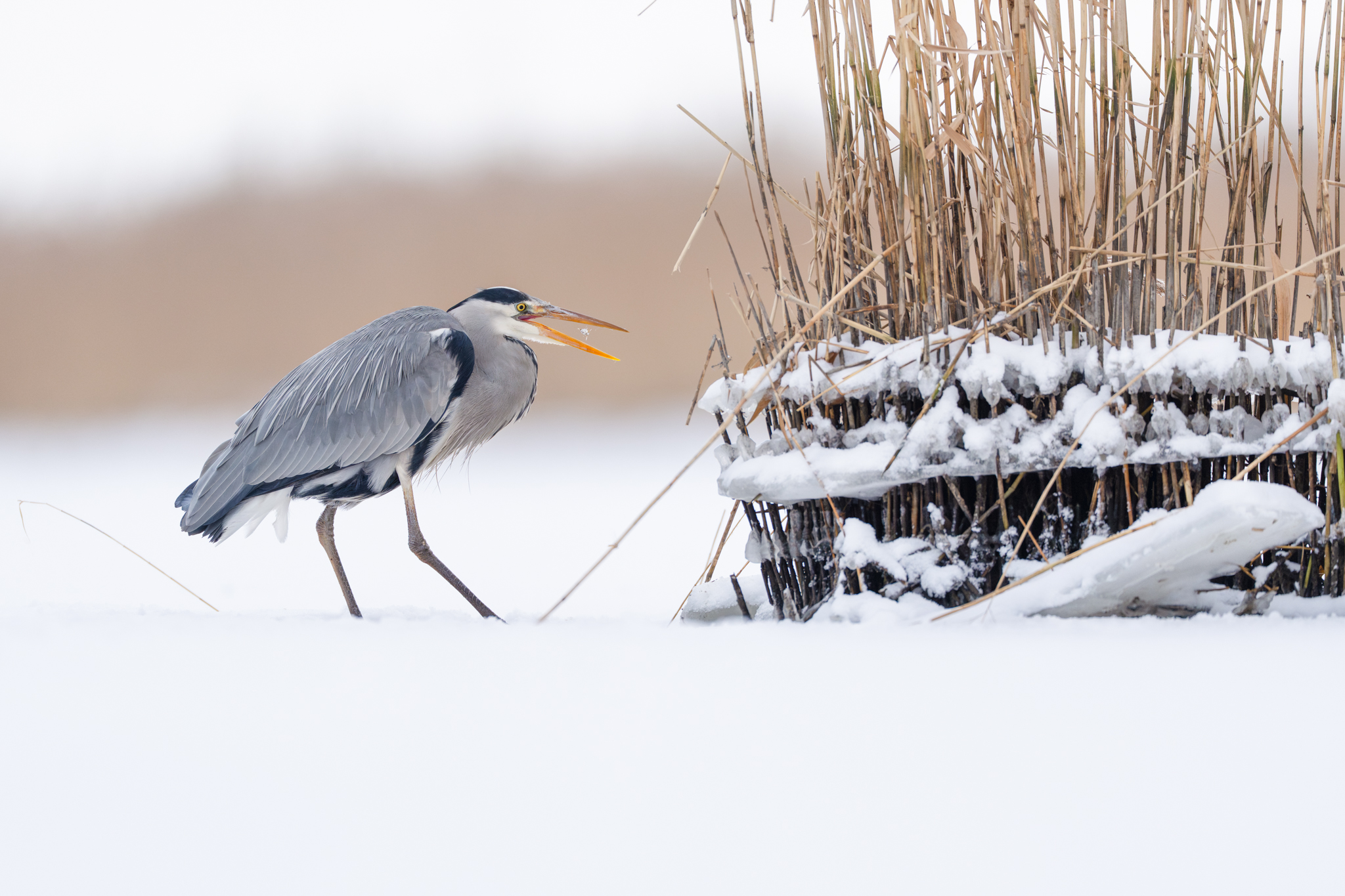
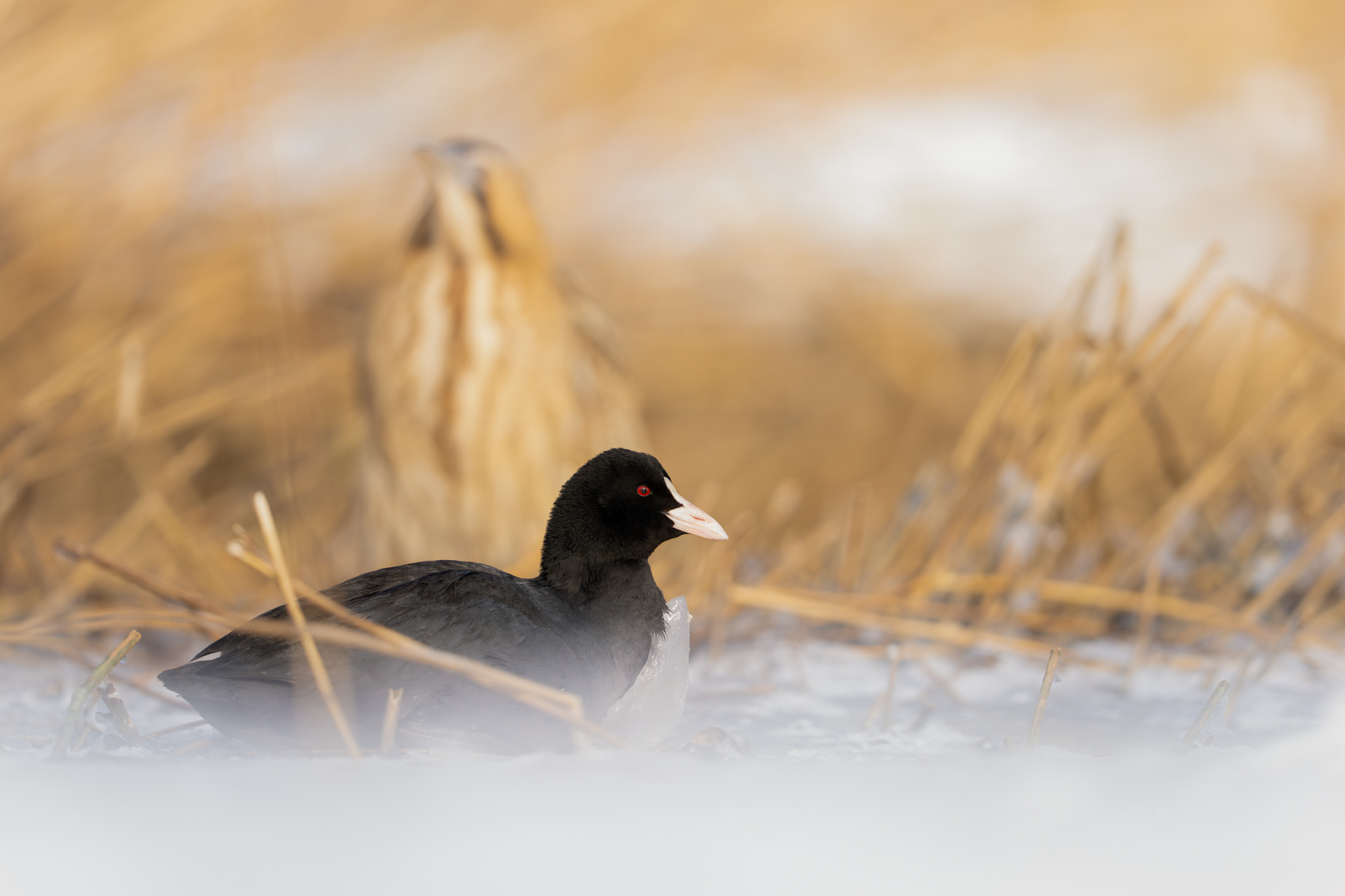
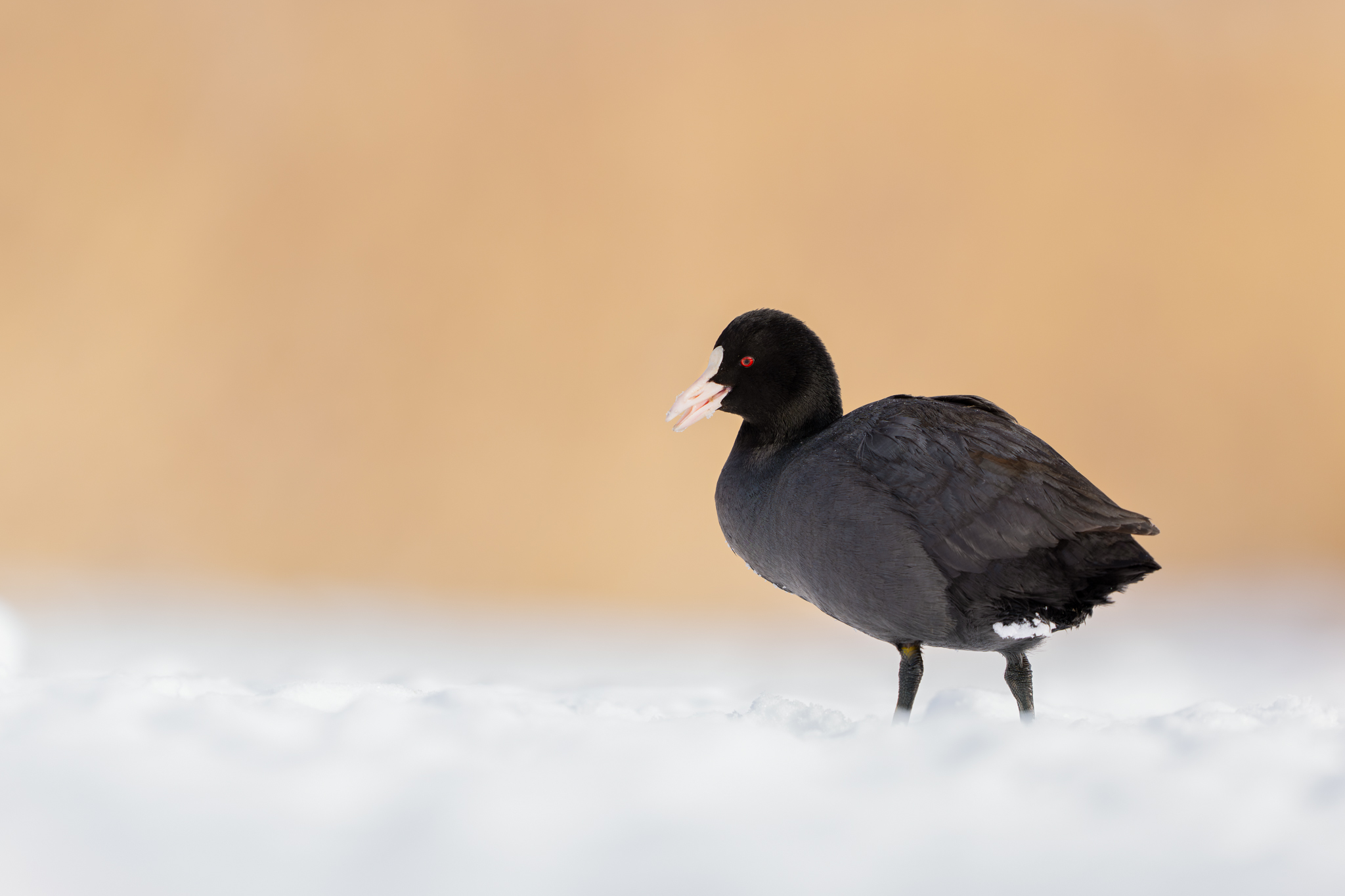
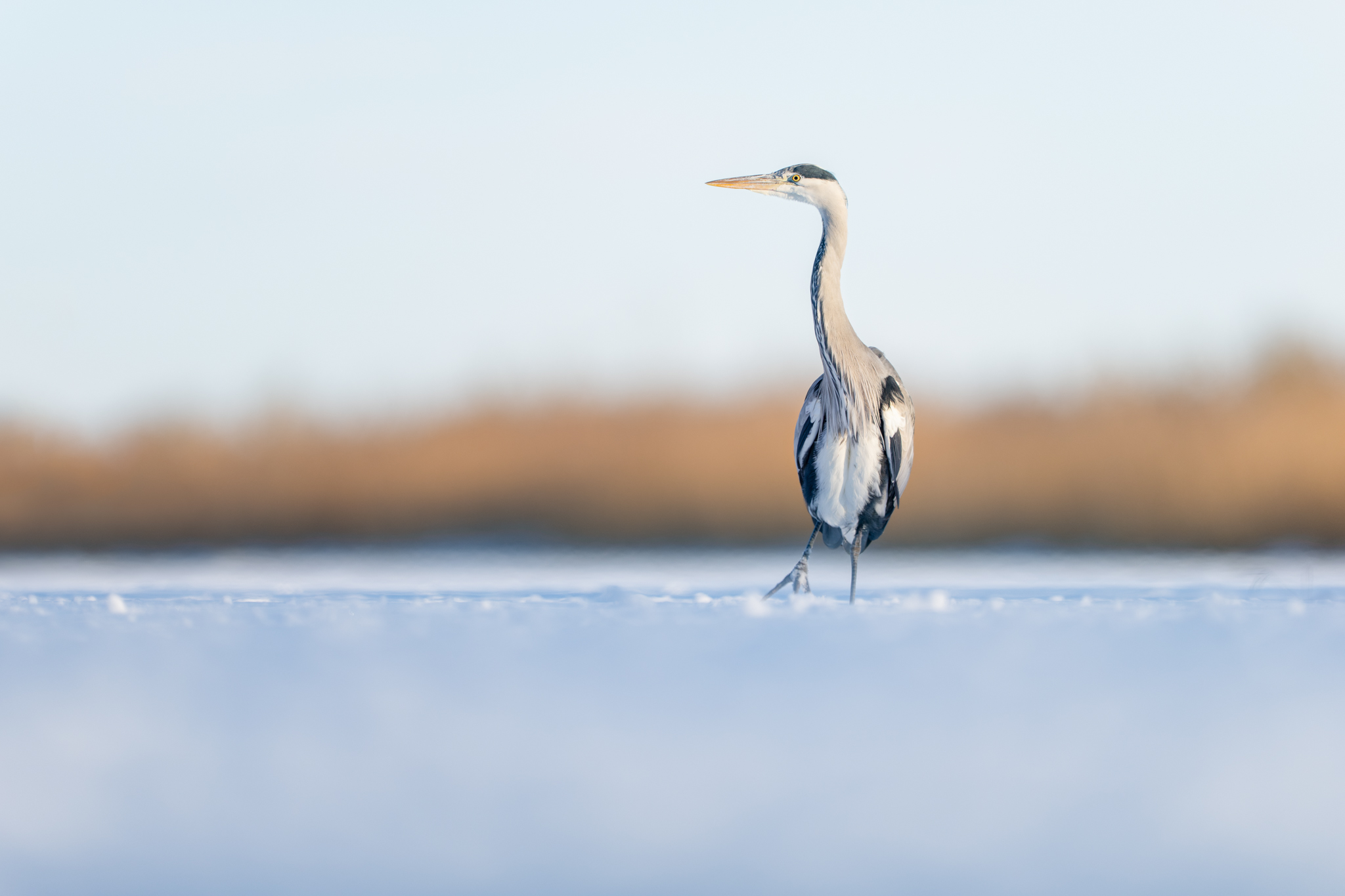
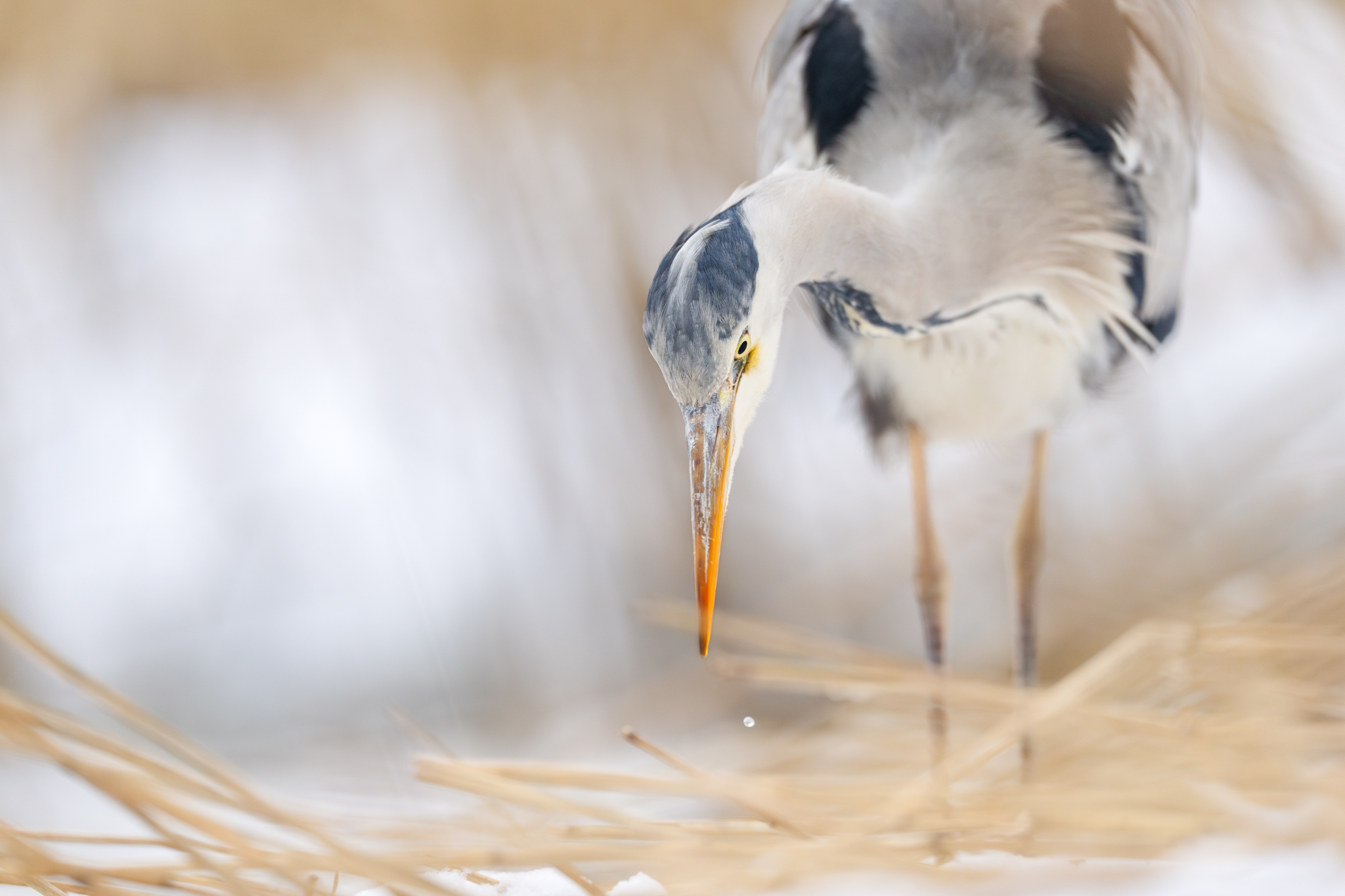
Bitterns aside, there were also grey herons and a single coot playing around. Actually, they were super interesting to photograph too. Coots are not really shy, but herons definitely are, and they look lovely in snowy conditions. I only wish we had more snowfall and I could find time to take pictures in such dreamy conditions. Who knows if there will be another chance?

I certainly had a lot of fun taking pictures, but I was left with more doubts than I had before, along with mixed feelings about the crowd experience. I hope after reading this story, you are left pondering these questions, too. And I hope you enjoy the pictures as well.

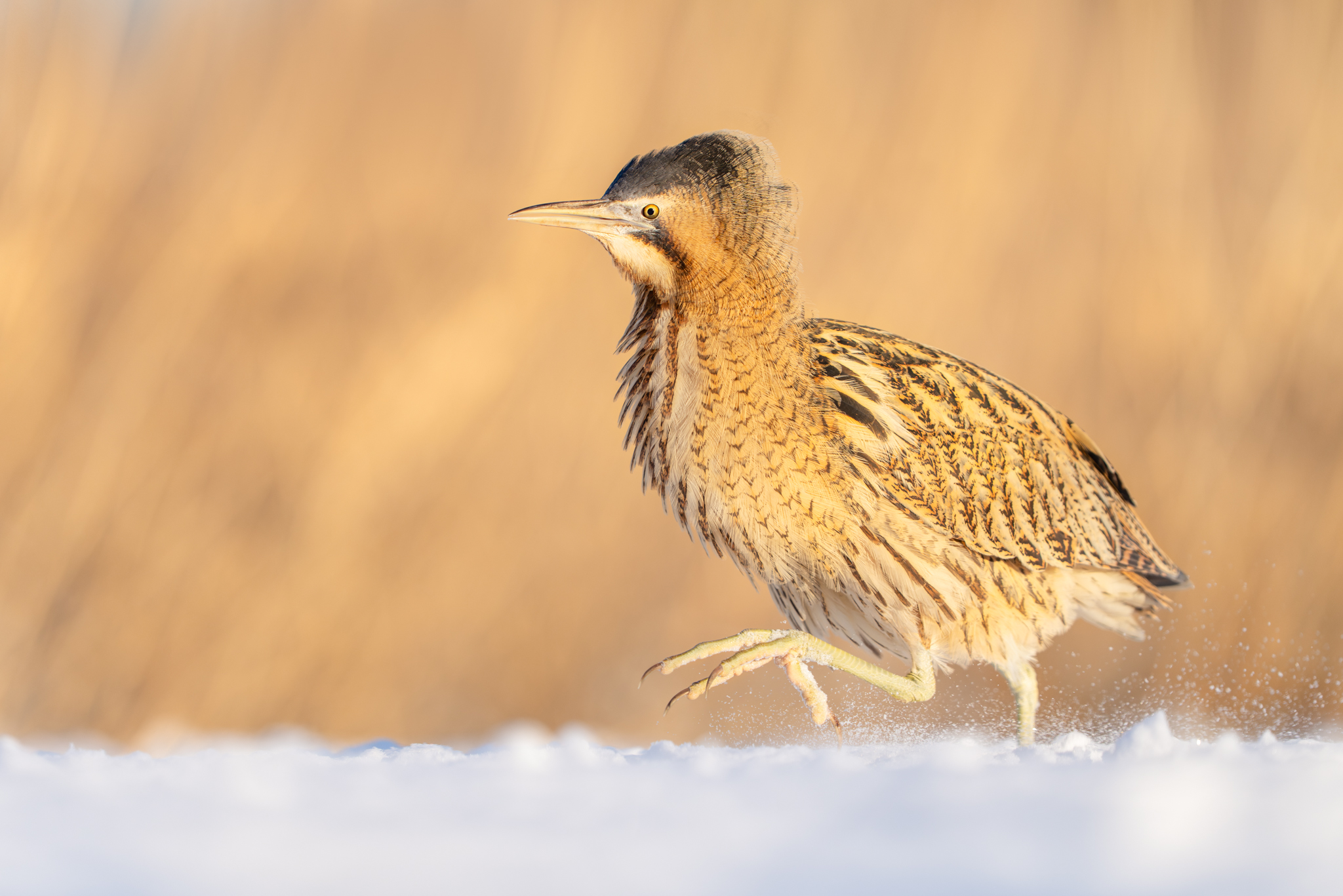
Stocky, brown heron found in extensive reedbeds; typically very secretive. Seen mainly as single birds in flight, especially early and late in the day. Stealthy and easily overlooked; cryptic plumage blends well with reeds. Bizarre „booming” song often reveals presence.

Ebird.org